In therapy, when people feel overwhelmed, I ask them to identify an achievable next step.
For me, here and now, achievable next steps include:
sending an email inviting somebody to connect with me via ZOOM,
opening up 2020 tax preparation software for the first time,
entering some tax data,
sending my video of “Vaccinated Women” to another TV show,
calling my health insurance company about family coverage,
calling a new company about my flexible spending health accountability account,
dancing, and
sharing these images with you:
According to the CDC, achievable next steps are definitely changing. Change is stressful, even those changes you desperately want. I would suggest choosing and practicing an achievable next step for reducing stress.
For me, sharing music I love is an achievable next step. Here are international women taking achievable next dance steps to “So What” by Miles Davis.
Is an achievable next step for you leaving a comment about this achievable-next-step post?
Gratitude is always an achievable next step for me.
The ability to trace (identify and measure) all the stages that led to a particular point in a process that consists of a chain of interrelated events.
Let’s see if we have the ability to trace (identify and measure) all the stages that led to this particular title in a process that consists of a chain of interrelated blog posts.
That’s it. Today’s blog post title is traceable to that sign in a Whole Food Market, which I saw yesterday when Michael and I were doing our weekly food shopping.
After we shopped, removed our masks, and got into my traceably bright yellow car, Michael said, “That was stressful. I used to enjoy food shopping.” Michael’s comment has traceability — we are in a particular point in a process of a chain of interrelated pandemic events.
Do you see traceability in my other photos from yesterday?
Fred Astaire’s character dancing on the walls and ceiling has traceability from Sarah Churchill‘s character revealing earlier in Royal Wedding that she used to imagine she could dance all over the floors, walls and “even the ceiling” when she was a child. Sarah Churchill’s lineage has traceability to her father, Winston Churchill.
So much traceability, so little time.
Today’s thanks — to everybody who helps me blog every day, (including YOU) — have traceability to yesterday’s visit to Whole Foods, too.
What are stress balls? Are they squishy balls that you can squeeze when you’re stressed?
Are they creatures who are feeling lots of stress?
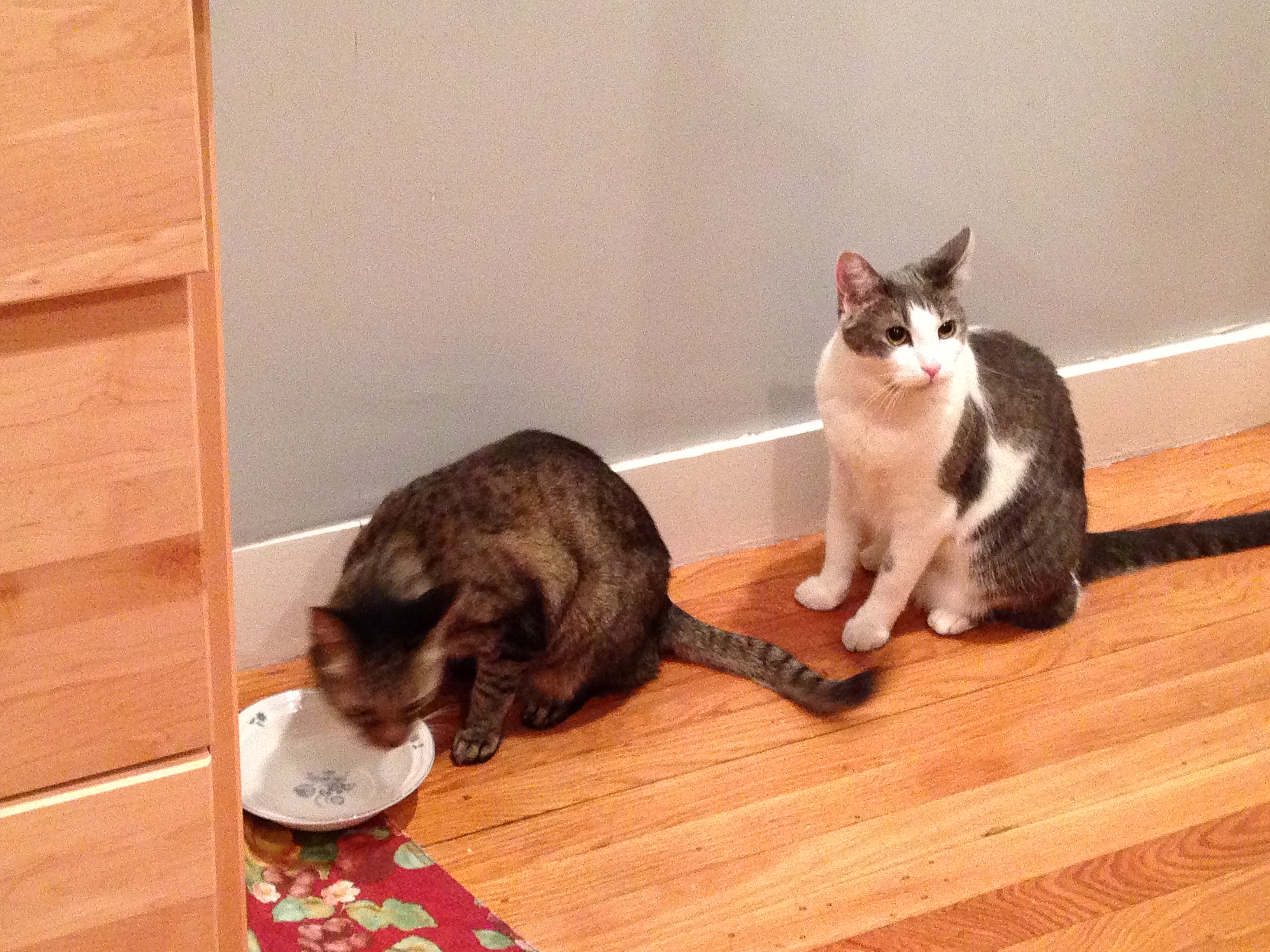
Harley does not look like a stress ball in that photo, but usually he stresses and runs away when I try to take a picture of him.
Even stress balls, like Harley, can relax at times.
I’m a stress ball today because I have to do many things (including giving a presentation about my therapy groups, singing songs in meetings, running a board meeting, preparing for a trip to L.A., planning a dinner in L.A., and more) all while dealing with a bout of insomnia and some ambivalence about possible choices.
What helps when you’re a stress ball, besides squeezing a stress ball? My niece Julie, of The Joy Source, suggests changing the words “have to” (see previous paragraph) to “get to.” So, it’s not that I have to do many thing (including giving a presentation, etc.) , it’s that I get to do many things (including giving a presentation, etc.). That shifts me from being a stress ball about too many obligations to being grateful about having the opportunity to do all those things, connecting me with confidence in my skills to get things done adequately enough.
I don’t have to share my other photos from yesterday, but I’m glad I get to share them with you.
Here‘s what YouTube gives me for “stress ball song”:
Somehow, I’m not a stress ball any more.
What helps you be less of a stress ball?
Thanks to all who helped me stress less by stressing all the things I stressed in this “stress balls” post and — of course! — YOU.
Yesterday, in a new therapy session, somebody was talking about the new normal. Because the new normal has been changing all the time (which can cause new stress and new anxiety), we discussed new coping strategies like self-care, setting new limits, mindfulness, and taking a breath.
New snow is predicted today for New England, which is normal for this time of year.
Are there new normals in my new photos?
Normally, every time I see that new hotel marquee it has a new musical message. Whenever I see a two-fingered peace sign, I hope that peace may become the new normal (even though today’s new normal is “Gimme! Gimme! Gimme.”).
Today, I have a sense of urgency about finishing this post, because I need to get my INR level tested at 8:15 before I go into work.
I often have a sense that my sense of urgency adds to anxiety and stress. If I had more sense, I’d probably let go of that sense of urgency, take a breath, and slow down.
I’m taking a breath and slowing down to share images I sensed yesterday.
Ann would say:
be aware of triggers (things that increase your anxiety),
notice and practice whatever reduces your anxiety (including self-care, being in the moment, forgiveness, etc.),
Last week, I got my yearly review at work, which could have been a source of subjective stress.
Instead, my subjective opinion is that it was an excellent review, which reduced my stress.
My supervisor objectively stressed my need to reduce my subjective stress, as follows:
Goal for next year: Decrease subjective stress level. Keep mindful of her strengths and accomplishments and resource limitations while managing the intense level of requests so she can continue to provide excellent patient care with less stress to herself.
I subjectively want to stress this, here and now:
I subjectively think that “decrease subjective stress level” is an important subject for my supervisor to bring up.
The hospital where I work can be very stressful, subjectively and objectively.
I constantly explore the subject of stress reduction in group and individual therapy.
Like many health care professionals, I am better at helping others decrease stress than my own subjective self (which has been the subject of many articles in the health care field).
How is your subjective stress level? What increases it? How might you decrease it?
I’ve been thinking about the subject of stress a lot lately. My subjective opinion is that my stress level is higher than usual because my son is leaving home to attend Edinburgh University this month and I’m having open heart surgery soon afterwards. Both these sources of stress of have been the subject of many recent blog posts here.
Subjectively, it occurs to me that both those stressful events are objectively stressful. That is, most people would agree they would cause stress to anybody. “Subjective stress” is the stress I might add to that stress by worrying about subjects I can’t control (like whether my son will receive his student visa in time before his scheduled flight on Saturday), or by subjecting myself to fortune telling, catastrophizing, blaming,comparisons, all-or-nothing thinking, personalizing, mind reading, and all the other cognitive distortions common to human subjects (which have been the subject of many of my previous blog posts).
I’d like to stress that I often decrease my subjective stress level by taking subjective pictures of my surroundings and sharing them here, like so:
Did any of those subjective photos increase your subjective stress level? Decrease it?
Subjectively, I believe this number from Stephen Sondheim’s Company is a good example of subjective stress making an objectively stressful situation (a wedding) more stressful:
You leaving a subjective comment on any subject might reduce my subjective stress level. Shall we find out?
Objective thanks to all who helped me create this subjective post and to you — of course! — for subjecting yourself to my blog, today.
Yesterday at work, I facilitated a group of ten people hoping to reduce symptoms of anxiety, depression, and stress.
Today, I’m experiencing symptoms of anxiety, depression, and stress — not because of that group, but because of my own inner reactions to what I’m perceiving in the world around me.
Therefore, I shall now use some skills we discuss in therapy groups, including
reaching out to supportive people,
accepting what is,
identifying achievable next steps, and
focusing on positive images.
Here are some images I captured yesterday — the first two at work and the rest at Boston’s Museum of Fine Arts.
I believe it helps to look closer, even at things that are difficult to see. For example, I saw this inside, at the Museum of Fine Arts.
When I looked closer, I saw through it, to the outside.
Seeing through to the outside, with this post, is helping me now.