Posts Tagged With: childhood illness

Day 186: Watch out

I have a large collection of unusual and inexpensive watches. I started this collection over 35 years ago.

The collection got much larger when eBay came along — when it became much easier to find watches that fit my Collecting Criteria.

The number of watches I collected got a little scary. Actually, the number didn’t scare me, but I noticed that people had a reaction to that number — which looked a little like fear but might have just been surprise — when I would ask them to guess:

How many watches do you think I have?

People would always guess much lower than the actual number, even though I would explain — just as I did above — that I liked to collect these and that they were very accessible through eBay.

Collecting these watches definitely met some sort of need. I guess any kind of collecting behavior can seem like a compulsion. It didn’t feel like a compulsion; but I did spend a fair amount of time looking for watches, deciding about them, and adding new ones to my collection. It was fun.

Was it a habit? An addiction?

I’m reminded of a joke:

I may be addicted to drinking brake fluid, but I can stop at any time.

I kept collecting watches, for many years, growing my collection. And I did have Too Many watches to keep track of, to wear, and — especially — to keep supplied with fresh batteries.

But it was an enjoyable and harmless distraction, and I had some very cool watches. So I kept collecting.

Except one day, I stopped.

I stopped after I had a dream. In that dream, I was wearing a watch and the watch turned into a cardiac pacemaker.

And I woke up from that dream and said, “Duh.”

“Duh,” as in, “Wow. That makes a lot of sense.”

Here’s why:

I got my first cardiac pacemaker implanted when I was 10 years old. I had no choice over the matter. I will be dependent upon a pacemaker until I die. I have no control over all that.

I can tell the story of Ann and Her Pacemaker in lots of different ways.

Triumphant: I am the longest surviving person in the world with a pacemaker!*

Painful: I wasn’t prepared very well, before I got my first pacemaker at age 10. I spent a lot of time — some of it alone and scared — in the hospital.

The stories we tell can be a way of getting control over things.

Collecting watches was another way, for me.

Pacemakers and watches have a lot in common. They both are man-made devices that people wear. They are devices designed to measure and mark time, in an important way. As a matter of fact, all the pacemakers I got, until I was well into my 30’s, had a fixed rate. That is, they would produce the same number of beats per minute, every minute, until they ran down. The main difference between those pacemakers and a watch: my pacemakers were set for 70 beats for minute, instead of 60.

Anyway, once I realized WHY I was collecting watches — in a new and deeper way — I stopped needing to collect them. I’ve bought a watch or two since then, but very rarely.

I mean, I have enough watches, people.

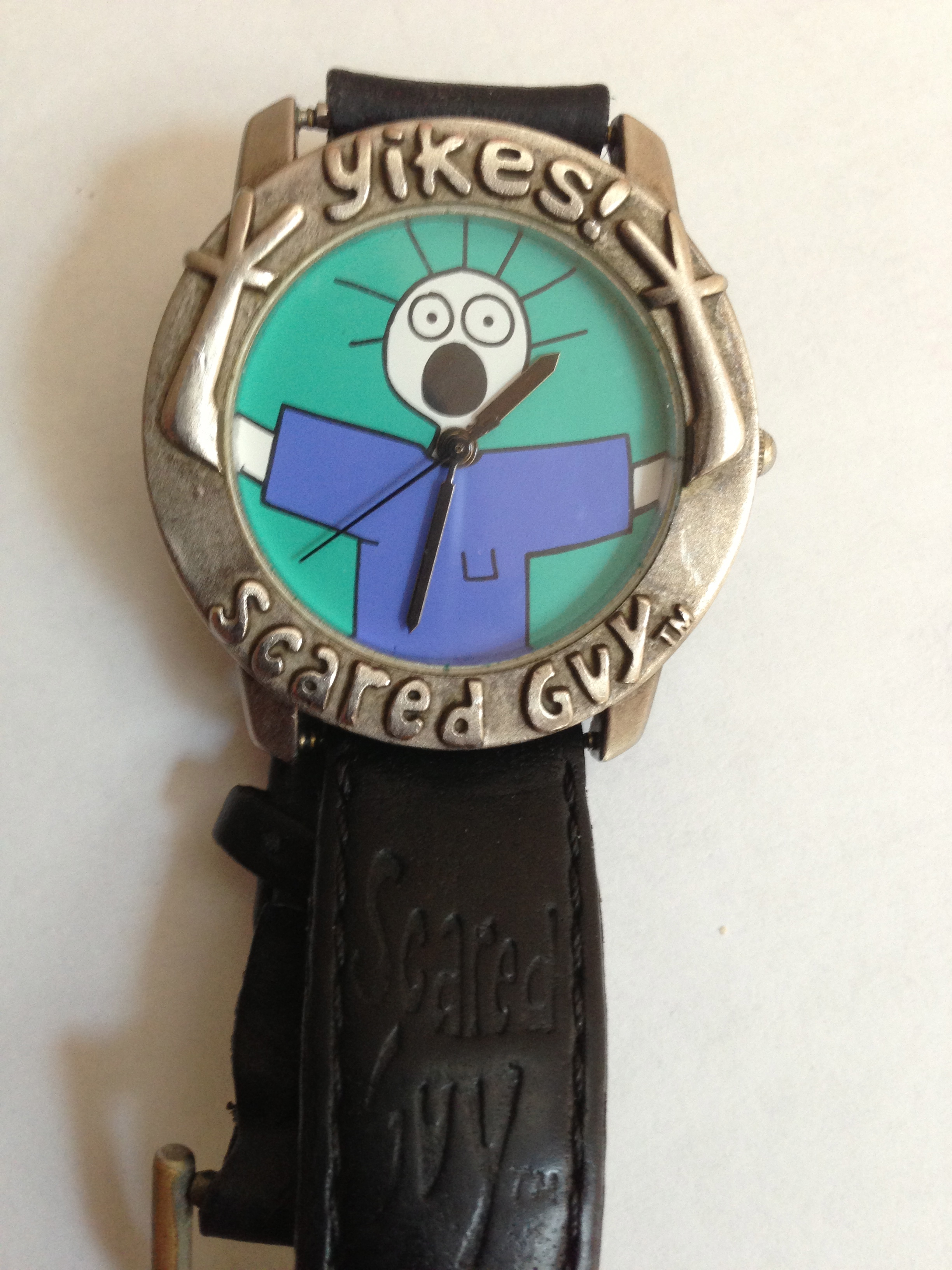
Before I end this post, I wanted to share one of my favorite watches with you:
Image

I got this watch on eBay, many years ago, when it came up in my saved search “unusual watches.”

This watch was developed by a woman who worked with kids who had cancer. In the eBay listing, she told the story of how she was working with a little boy who was having trouble expressing his fear of dealing with the diagnosis and the necessary procedures. On an impulse, she drew the picture of the character, whom she dubbed, “Scared Guy.” Scared Guy helped the little boy talk about his fear.

She later turned “Scared Guy” into a charitable enterprise, and she created and offered merchandise — including watches — using that character she drew for the little boy. The proceeds either went to supporting cancer research or other aspects of work with children who had cancer — I can’t remember, exactly.

I would give you more details about “Scared Guy ™” but I can’t find anything listed on the internet this morning. I do have the original watch box somewhere, which would tell me more, but I’m not looking for that right now.

I don’t have the time.

I have to get ready to go into the hospital, where I work.

And, I confess, I’m kind of a Scared Guy, today.

Why? There will be very few people around today, at the hospital where I work, because it’s the day after the July 4th holiday. I’m the only one there who has certain responsibilities. I may need to do some difficult and new things.

It’s a little too close, for comfort, to the old story I tell about my childhood, where I’m in a hospital, feeling alone, lost, and confused.

However, there are lots of differences today.

For one, I’ll be wearing that watch.

Thanks for being here, and reading, today.


* In 2014, I found out that I am NOT the longest surviving person in the world with a pacemaker.  See this post for more about that.
Categories: personal growth | Tags: , , , , , , , , , , | 40 Comments

Day 184: Overwhelmed (naming it)

I’m definitely feeling overwhelmed.

How can I tell?

  1. My self-judgment — and my use of cognitive distortions (such as comparing myself to others, catastrophizing about the future, and mind-reading what other people think) — has increased.
  2. Joy is hiding.
  3. Doubt and shame are in the house.

As usual, it helps to name things.

Why am I feeling overwhelmed?

Some guesses:

  1. I think I’m having a delayed reaction to my son suddenly developing a collapsed lung a few weeks ago. At the time, it was clear what had to be done to deal with things. Now, there’s time to have lots of feelings and thoughts about it.
  2. We are travelling overseas next month. While I love travel, I still get anxious about it.
  3. I’m doing too much at work (but so is everybody else there).
  4. I’m not so great at reaching out for help, although I’m working on it.
  5. Some people I really like at work have left or are leaving.
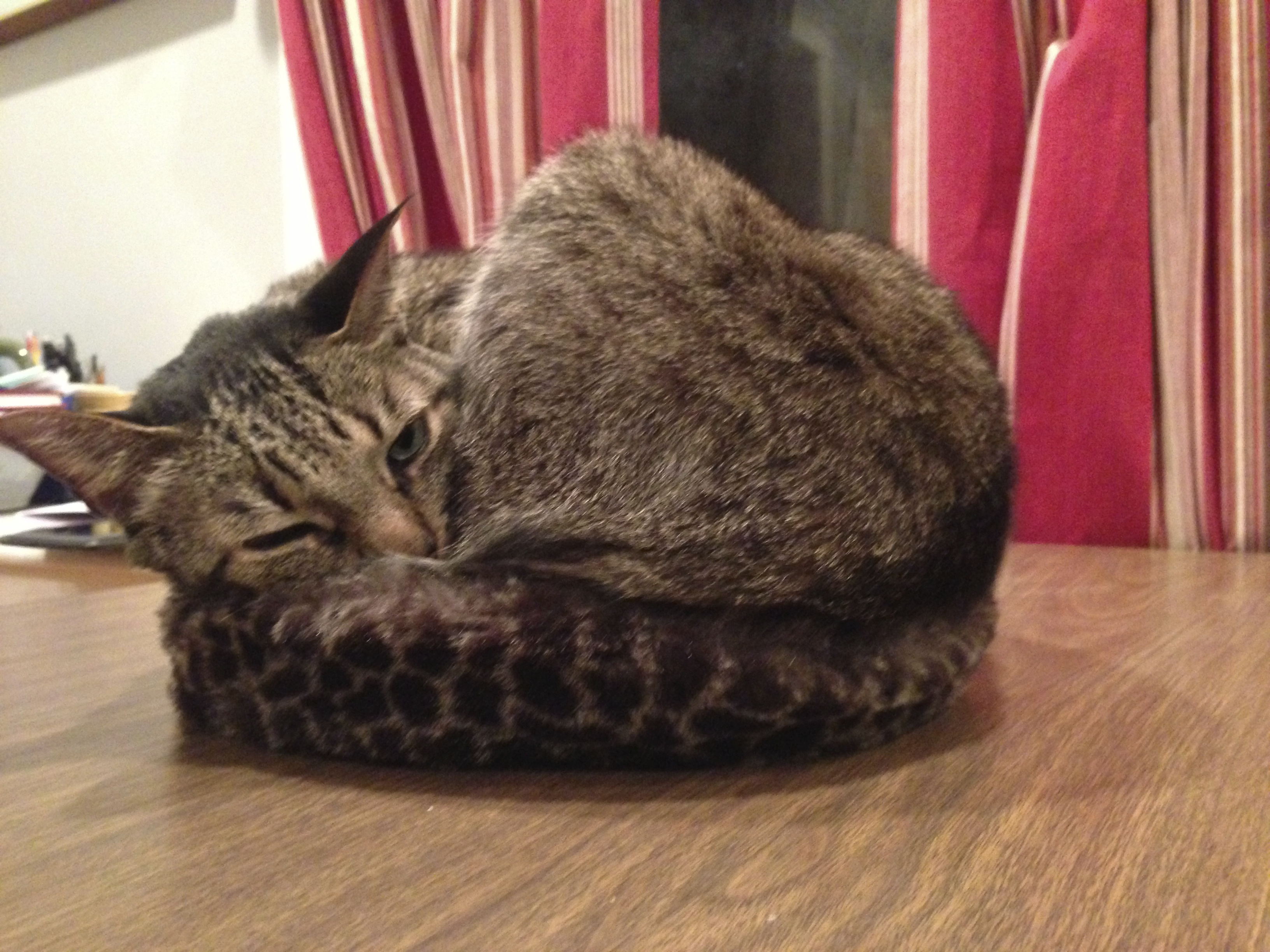
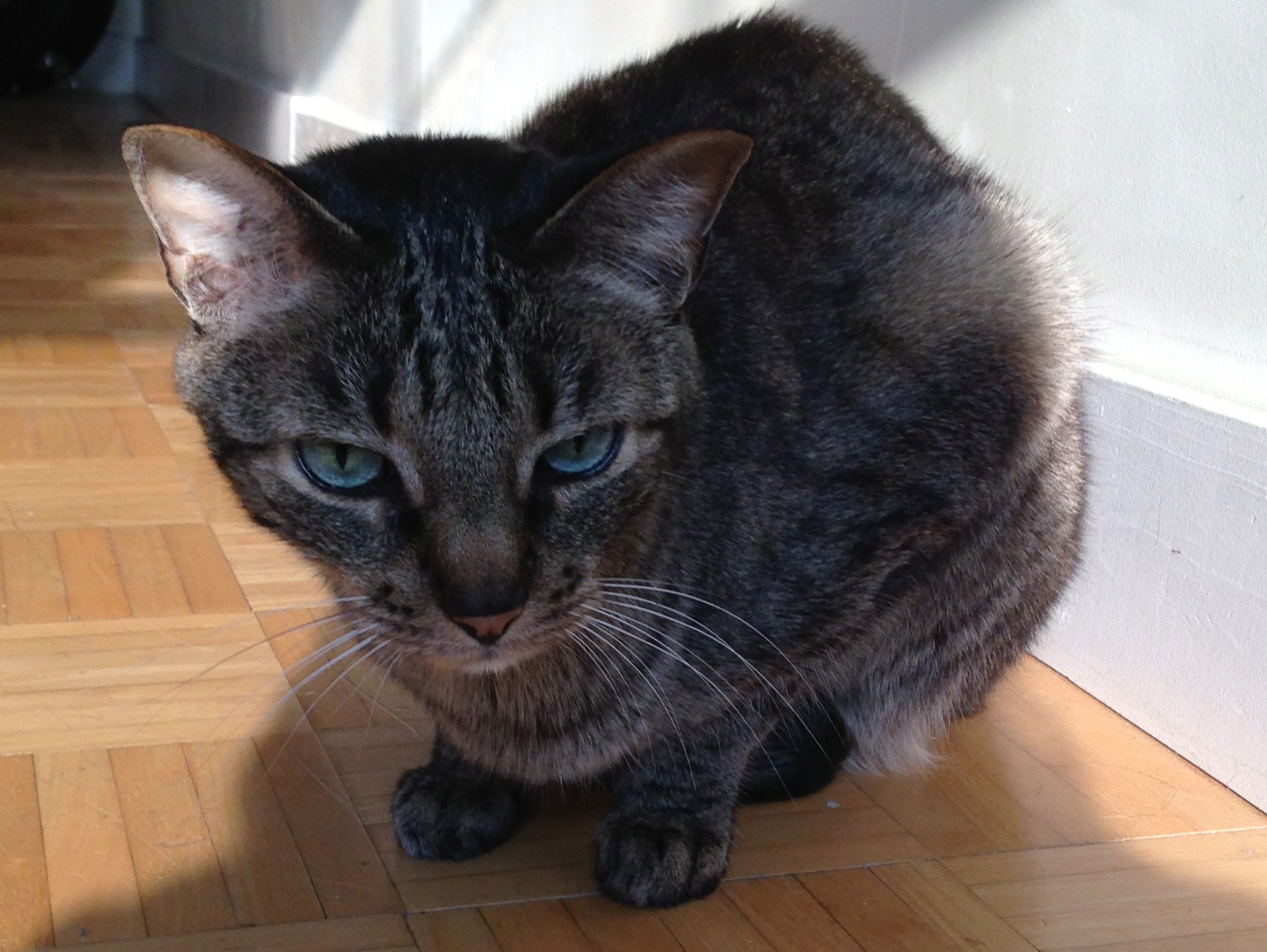
  6. My cat has been biting me lately, despite the fact that he and I are both charming creatures.
  7. It’s going to be hot and humid on July 4th (tomorrow) in the Northeastern USA. There are some people I love whom I won’t get to see that day.
  8. I’m working the day after July 4th, and I’m expecting to be doing a lot of work, with very few people around.

Geesh. I guess there’s a lot. And, as usual, it helps to name — and number — those things.

Because then I can say to myself, “No wonder you’re feeling overwhelmed.”

Sometimes, I think that’s the main thing I do as a therapist — witness and validate that somebody is dealing with A LOT.

It also helps to recognize next steps. Let’s take #6, above.

IMG_1251


Or to paraphrase Henny Youngman, “Take my cat. Please.”

Just kidding (although I don’t like getting bitten in the morning when I’m getting ready for work or writing this blog.) (Actually, I don’t like getting bitten, any time. I’m funny that way.)

I’ve arranged for this charming creature to have a check-up later today and — for the first time — it’s going to be a vet who makes house calls! (Or as I’ve been calling them, house-cat-calls.) That may help resolve the biting issue, and be less stressful for all charming creatures involved.

And I’ll deal with one more item, on the list above, before sending this post out into the blog-o-sphere:

#7. Even though I will miss seeing some people I love tomorrow, I will see other people I love, too. And, most likely, I will figure out a way to see something else I adore.

images (1)

Fireworks.

I think that’s likely, don’t you?

Thanks for reading today.

Categories: personal growth, Uncategorized | Tags: , , , , , , , , , , | 5 Comments

Day 177: What gets me up in the morning

#1: Gratitude that I have another day.

#2: Belief that my work — and my existence, in general — have some value.

#3: Anxiety, because I work at a hospital, which reminds me of scary stuff I experienced as a kid.

#4: Remembering that I will see people I love today.

#5: Habit, because I’ve been waking up, after sleeping, for 60 years.

#6: The alarm, which is always a piece of music I choose and then use for a period of time. This is the one that I’ve been hearing lately:

(That version fades out at the end, but that seems right, because I never listen to the whole thing when I wake up.)

I’m glad all those musicians — and Aaron Copland — got up in the morning, too. (No matter what time they got up, it was morning somewhere.)

And, of course, I’m grateful to you, whatever time it is when you’re reading.

Categories: personal growth | Tags: , , , , , , , , , | Leave a comment

Day 164: Unfreezing

When I was a kid, I had lots of scary experiences in the hospital, all by myself, because my parents weren’t allowed to be with me.

I remember listening to the beeping sounds of heart monitors, in the darkest part of the night, feeling frozen.

I’m writing this blog post from a cot in a hospital room, next to my amazing 15-year-old son, who is recovering quite nicely from a procedure, this afternoon, to correct a “spontaneous pneumothorax.”

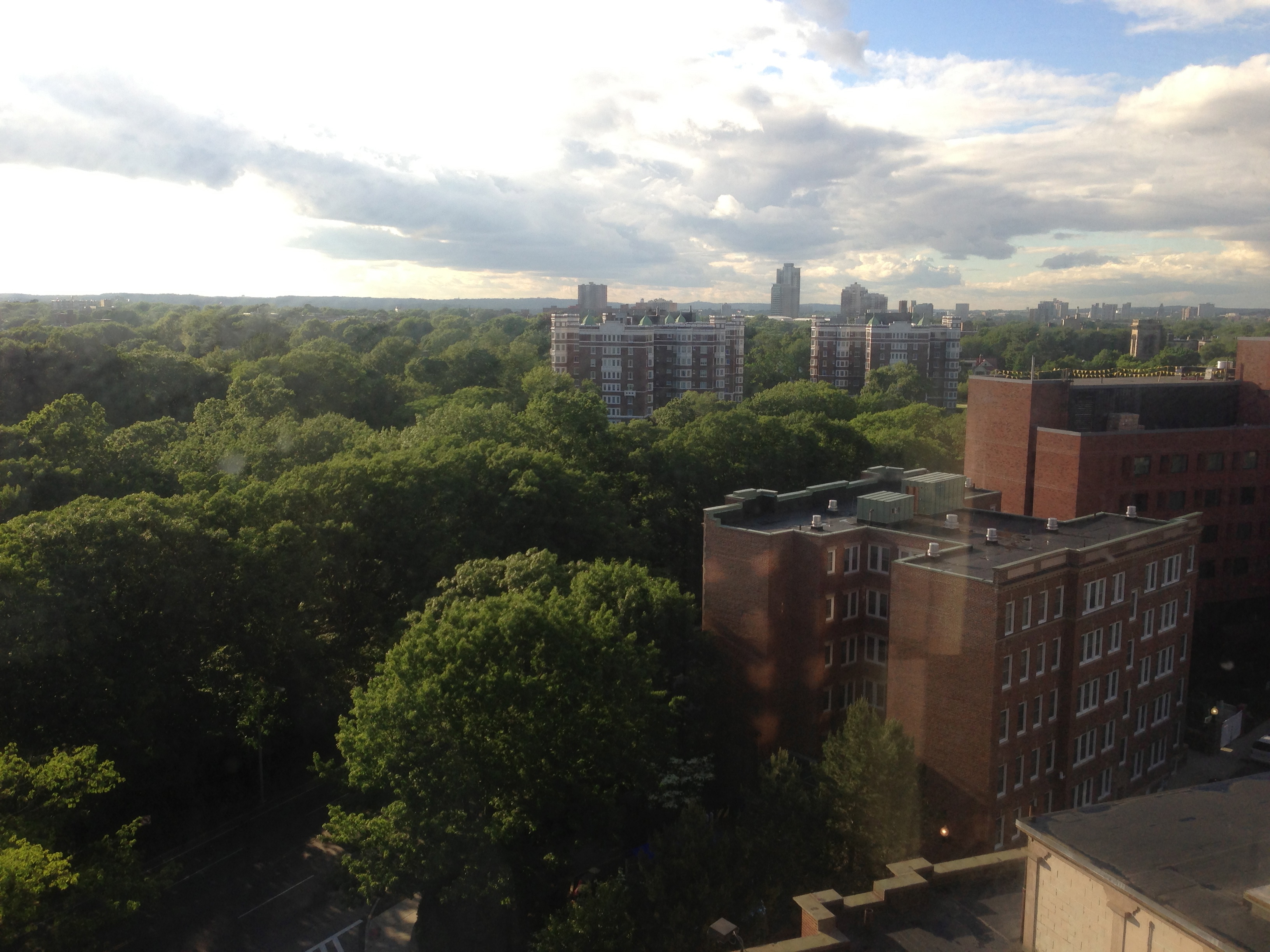
Earlier, this was the view from his hospital room as day turned to night:

Image

ImageImage

It’s the darkest part of the night, right now. The only sounds I hear in this room are reassuring ones, including those of my son’s undisturbed sleep.

Each moment I’m with him now, I’m unfreezing.

Thanks, so much, for witnessing this.

Categories: personal growth, photojournalism | Tags: , , , , , , , , , | 14 Comments

Day 161: Tales of Tigers

Tiger Tale # 1

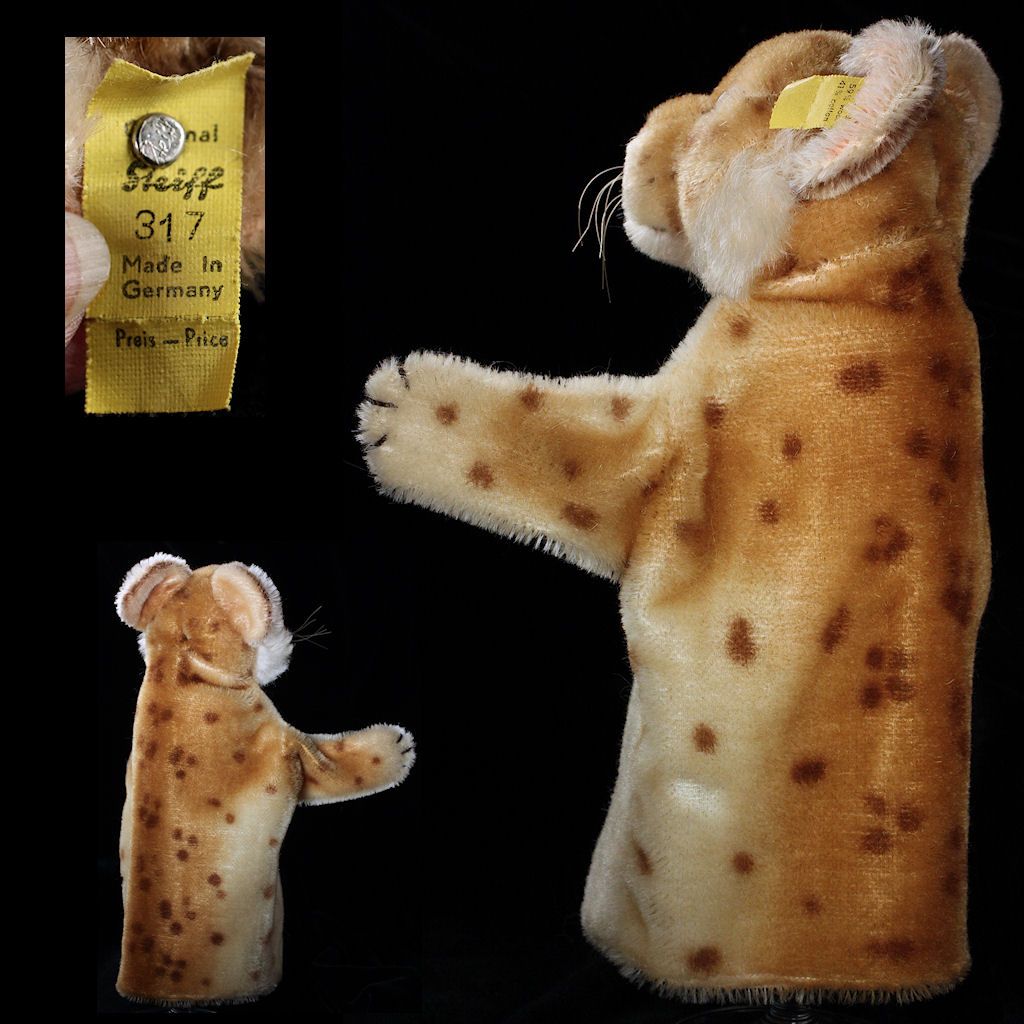
When I was a little kid, my parents went away on a trip. They brought home, as a gift for me, a Steiff puppet, that looked a lot like this:

RL-680.3L

I was apparently unfamiliar with the fine points of animal classification at that age, because I named it “Tiger,” despite the telltale lack of stripes on its fuzzy little body. Tiger became my favorite toy. I slept with Tiger and often carried him around with me. As we say in the psychology business, Tiger was a transitional — or comfort — object. Or, as one might say in any business, I loved Tiger very much.

One of my main memories of Tiger is — of course — a scary one (since those are one type of memory that tends to stick). My family and the family of my mother’s best friend were visiting New York City. I was carrying Tiger with me, and Richie — the son of my mother’s friend, who was a little younger than I — grabbed Tiger away from me, yelled, “I’m throwing this off the top of the Empire State Building,” and ran away. I remember being so scared and upset, in that moment, standing frozen and alone, both Tiger and Richie gone.

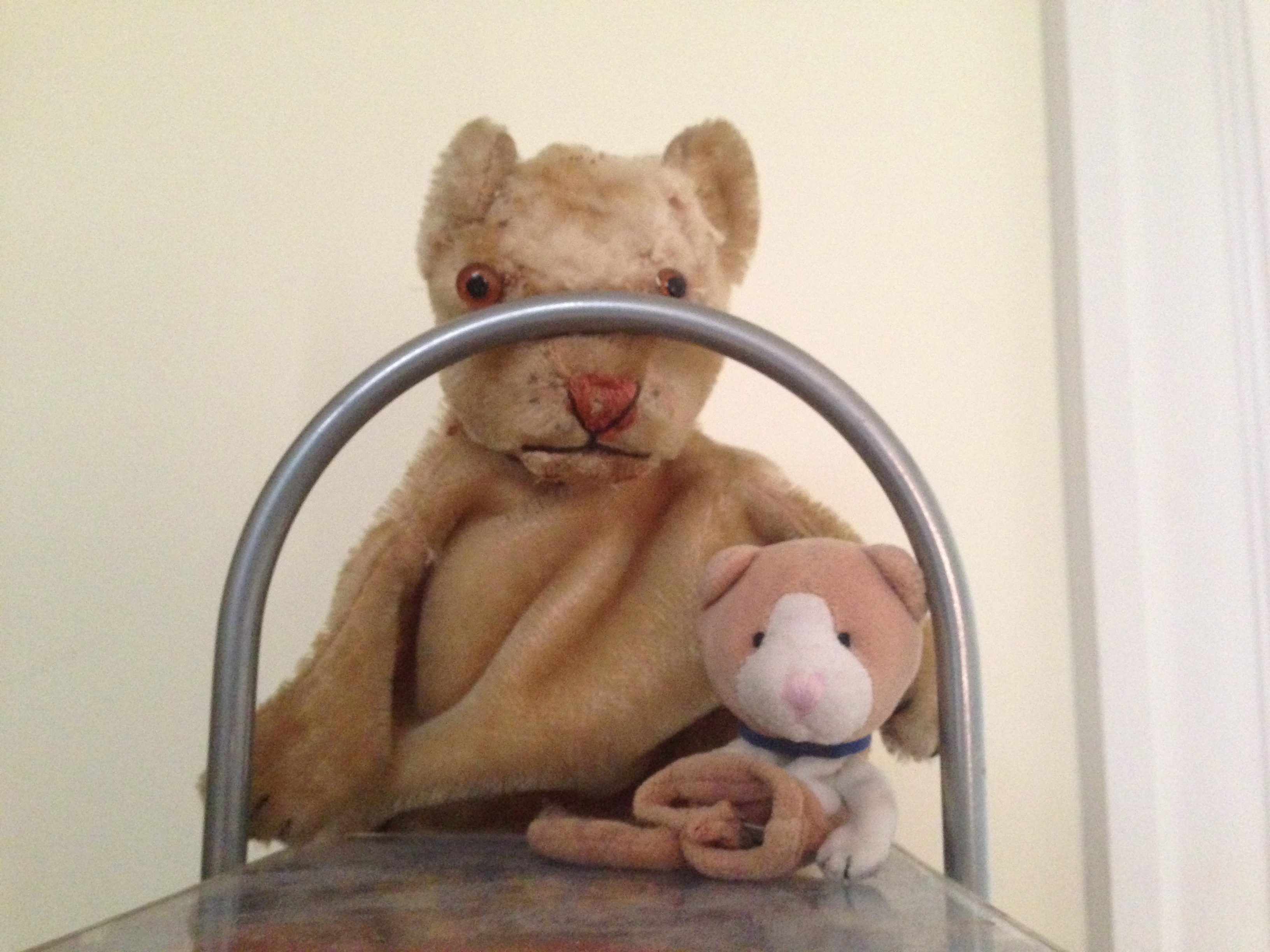
I can’t remember details about what happened next, except for vague memories of Richie catching some hell about that. And I know that Tiger was returned to me, because here he is:

IMG_1100

Two things you might note about Tiger today. (1) He is hangin’, these days, with his own transitional object and (2) the top of his head is particularly fuzzy. The latter is due to his needing corrective surgery years ago, after being placed on the top of a lamp, so he could listen to a little girl practice piano.

Tiger Tale # 2.

When I was 10 years old, and had my first major heart surgery at Children’s Hospital, I know I didn’t have my comfort object, Tiger, with me. People probably thought I might lose him. Or maybe there were other rules about that. I know there were rules, during those days, that prevented my parents from being with me there, outside of normal visiting hours. (Things have changed, quite a bit, regarding parents and children and hospitals, since 1963.)

My mother told me a story, later, about sitting at my bedside, soon after that surgery, during regular visiting hours. I had fallen asleep. Suddenly, I stiffened. As my mother described it, “You went stiff as a board. Then, you yelled, ‘I have a tiger in me! A tiger!!'”

My mother was freaked out and frightened by that, I know. Again, I don’t remember the details that followed.

That tale has always stuck with me. My assumptions about that — then and now — include these: I was in pain. I felt like violence had been done to me (and my world). I was probably scared and angry.

One thing I’m noticing now: Just like with my Steiff puppet, I used the word “tiger” not-exactly-correctly, to name something important to me.

As I’m revisiting this story today, I’m glad I didn’t yell out the name of another ferocious thing with fangs and claws — like Bear, Beast, or Monster. Instead, I used the name of something I already loved.

In a lot of ways, I’m still making sense of that moment.

For example, this is a book I’ve been reading lately:

Waking-the-Tiger-9781556432330

I bought this book, years ago, because of the title. Since then, it’s been recommended by several people, as an effective way to work with people dealing with PTSD symptoms. I’ve resisted reading it, until now. (Also, I CANNOT hold on to the first word in the title of that book. Whenever I mention it to somebody — a healer, or somebody who wants to heal — I can never remember the verb. In my mind, I struggle: “Taming the Tiger?” “Turning the Tiger?” “Stirring the Tiger?” And I look it up, every time, to discover that first word, anew.)

The time is here for me to look more closely at that tiger. And even wake it, in some way.

Something that helps me feel braver and more ready: I’ve always loved cats, of all kinds. Big ones. Little ones. Wild ones. Tame ones.

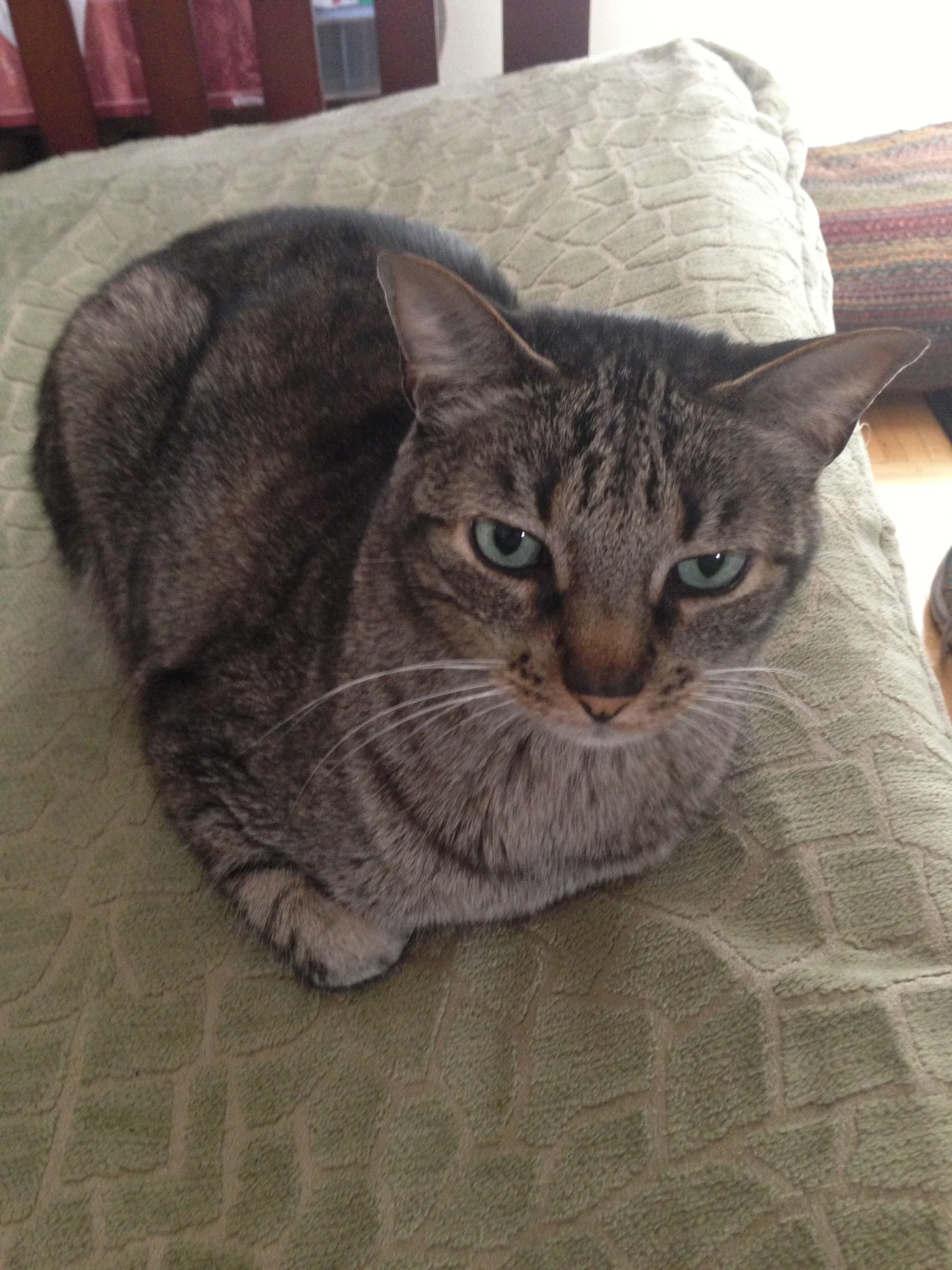
Including this tiger-striped one, who watches me as I write:

IMG_1101

Thanks to all, for reading today.

Categories: personal growth | Tags: , , , , , , , , , , , , , , , , | 7 Comments

Day 149: To Tweet or Not to Tweet (is that the question?)

(This post is dedicated to my good friend, Newell.)

Like most people my age (I assume), I resist some new things.

Like most people (I assume), I resist some new things.

Resistance to new things is pretty common, isn’t it? I mean, it would make sense, that we would resist something unknown.

Change engenders both hope and fear. How could it not?

I’m not sure whether I’m any more resistant to new things now, than I was when I was younger.

I can’t remember!

That’s not exactly correct. I can remember a lot of things. I’m just not sure how to interpret all that data, regarding this particular question: Am I more resistant to change — now that I’m older — than I was before?

My guess, right now, is that I’m more resistant to change if I have some fears about the changes.

And the more secure I am in my competence and skills in adapting to change, the less fear I will have, and the less I will resist a change.

And, actually, dear reader, I’ve been thinking lately that the trend, for me, is to become MORE secure as I get older.

I confess: I like getting older. Whenever somebody asks me, what age would you like to be? I always answer, “This one.” I never name an earlier one.

This makes me feel weird, to tell you the truth. Because I hear so much noise, out there, regarding fear of aging. And I understand it. I do! Because the more we age, the closer to (the big D) we are.

(I didn’t want to freak people out, by using the D-word.)

But, for some reason, aging doesn’t make me feel closer to death, for the most part. (Ooops! I used the d-word.)

Actually, I know the reason. It’s because I was born with a heart “defect”, and I got that message loud and clear from people around me: You probably won’t live very long.

And about two years ago (when I was 58 years old), a doctor finally said to me, “You know what, Ann? I think you’re going to live as long as anybody else.”

So this unusual life of mine has given me several gifts (I assume):

  • I am often in the moment.
  • I am grateful for being alive (almost always, although I lose track of that sometimes)).
  • I enjoy aging.

Just so you don’t think my mind is filled with rainbows and unicorns, I will say this: I’m still afraid of death (although I’m working on that). And there are down sides to being as much in the moment as I am. (I have trouble planning ahead, for one.)

However, I do see My Unusual Life as bringing many more gifts than drawbacks.

Now, some of you, at this point, may be thinking:

What the hell is the deal with the title of this post? What does THIS have to do with Tweeting?

Good questions, astute readers!

Well, my intent when I started writing this was to discuss how I have resisted getting on Twitter, and to wonder whether this reflected (1) resistance to change, in general and (2) resistance to a (relatively) new-fangled technology, from me, an older person.

But, as Dr. Seuss said ….

Image

Thanks for reading, everybody.

Categories: personal growth | Tags: , , , , , , , , , , , | 20 Comments

Day 141: I am singing differently this year

I’ve been working on my singing, lately.

I love to sing and have since I was a little kid.

I remember playing records of musicals — including “West Side Story”, “Oklahoma,” “South Pacific,” and “Guys and Dolls” — in the basement of my house,  pretending I was in those musical numbers. I danced and sang across the basement floor. Nobody saw me doing that (except for my cat, Tuffy).  It was one of my favorite and most joyful things to do, during some difficult times as I was growing up.

I also took singing lessons, starting when I was a kid.  The main thing I remember about that teacher, Mr Payette, was that he had some strong opinions about what was good and not good about my voice. He told me that the main thing that made my voice special was that I could sing really, really high. I was a Super Soprano — I could hit B flat over high C.   I remember him laughing, with delight, when my voice would keep going — up and up  — as he played the scales.

He also characterized my voice as thin, with not a lot of power. He told me that if I wanted to pursue singing, that I should only sing songs that highlighted my strength — the high notes.

So I sang mostly sweet, pretty songs, that had a high range, with not a lot of dynamic changes.  Songs like “Those Were the Days,”  by Mary Hopkins:

I loved singing these songs, but I never stretched beyond them, into something more dangerous or bold.

I remember something else  Mr Payette said to me, during my singing lessons. He told me to make sure that I never, ever hit a note wrong, when performing. That would be disastrous, he said, because …

you could sing every other note beautifully and perfectly, but if you hit one note imperfectly, THAT’S what the audience will remember.

I can remember him saying those words, so vividly. That really stuck.

I liked working with Mr. Payette. I think he was a good guy.

But I have been working on letting go some of those lessons he taught me. Because for most of my life, I’ve been kind of a timid singer. I’ve focused more on the imperfections in my voice. I’ve thought of my voice as weak. I’ve thought that there were only certain types of songs that I could sing. I’ve thought of myself as a “stiff” singer, not able to show the full range of human emotions.

I’m realizing that those ideas about my singing were formed when I was a kid, and they may be …. rather outdated.

When I was a kid, I DID have limits as a singer, especially as an interpreter of lyrics. I mean, I couldn’t give the lyrics of songs a full-bodied interpretation back then. Geesh! I didn’t even know what some of those lyrics meant.

I didn’t have the experience to give life to all those words about love and loss.

However I’ve been realizing lately that I’m not a kid any more, when it comes to song.  Now that I’m an adult, I can sing like one.

I don’t have to be timid — holding back for fear of making that one mistake that people will remember. I don’t have to imagine the audience forgetting everything else I may have sung, no matter how beautiful it was, if I sing one note imperfectly.

Now, I DO understand lyrics. And I can channel this understanding — and  the full range of human emotions —  into songs.

Also, about two months, ago, I made a real change in how I sang.  It started when I suddenly made room– through song — for a certain powerful emotion.

Anger.

About two weeks ago, when I was angry at somebody, and was considering trying my new anger technique of Screaming As Loud As I Could In the Car,  I tried something different, instead.

I made up an anger song — which included some rather rude words — and sang THAT in my car, as loudly as I could.

Man, it was fun singing that song.  It helped me let go of the anger.  And — holy moly!  Did my voice sound different!   It sounded clear and really strong, in  all registers. No matter what notes I was hitting in The Anger Song —  high notes, low notes, in-between notes —  everything sounded good  — and different — to my ears.

Since then, I’ve been singing differently.  I’m singing with feeling. I’m not holding back. I’m not afraid of the imperfect notes.

I’m thinking I’d like to keep singing more, this year. I may take some chances — maybe go to an open mic night and sing a solo. That’s always been a dream of mine, as yet unfulfilled.

Maybe I’ll sing, in front of an audience, a full-bodied, adult song, with complicated lyrics, and trust in my ability to deliver that song.  Maybe I’ll have faith that I can translate my ability to communicate passion and conviction — while using my regular speaking voice — into the musical realm.

I’m hoping that before This Year of Living Non-Judgmentally is over, that I will overcome some fears about singing in front of other people and do something new and spectacular.

No matter what, though I’m really lovin’ the different ways I’ve been singing lately.

Thanks for hearing  My Bloggy Song here, today. And I hope you let your full voice out, too, in any ways you can.

Categories: personal growth | Tags: , , , , , , , , , , | 9 Comments

Day 137: Ghosts and Bravery

When I was a little kid, I was afraid of ghosts.

I remember, very vividly, sitting stock-still, wide awake — when my mother, father, and sister were all asleep — listening for ghosts.

The ghosts that I was listening for —  among all the noises one hears in the middle of the night — were malevolent.  I feared they meant my family — and me — harm.

(By the way, I had no idea what I was going to write about when I woke up this morning. However, I know I’m writing about the “right thing” now.  How do I know that?  I’m crying,  and I don’t know where this post is going. )

I would sit up in my bed for — how long? It felt like hours, listening for these malevolent ghosts during the night.

Over the years, I’ve talked about these memories with a therapist or two.  I’ve been puzzled by why I was doing that, as a child.

I remember a therapist or two saying, “That sounds like you believed that you and your family were in danger, and you wanted to protect them.”

I remember thinking, in response to these therapists  (and I’m still thinking now): “That’s weird. Why did I think we were in danger?  And why did I think that I — a little girl who was sick a lot, during that time — had the power to protect us? Who did I think I was?  And who did I think was endangering us?”

Again, I’m crying, so I think I’m “on to something” right now.

And I’m not sure what it is, but I’ll do my best to get closer to something helpful, before I end this post, drive my son to school, and go on into work.

The thought, “Who do you think you are?” is one that comes into my mind whenever I think I’m too powerful.  It’s a painful thought, because it’s associated with shame.

Another thing that’s striking me, right now, is how brave and caring I apparently was, as a little kid.  I’ve never had that thought before today, as I’m writing this post for you.

Before today, whenever I’ve thought about that little girl, sitting up in bed, scared of ghosts, wanting to protect her family, these were the thoughts:

 How weird you were. That doesn’t make sense.  What were you thinking?  

But I’m seeing and telling the story, very differently, today.

Here’s something else that is helping me do that.

Yesterday, at work, I had the privilege of facilitating a group where one of the members — a beautiful, intelligent, passionate, caring, emotional woman, who had experienced painful experiences, illnesses, and set-backs in her life — talked about (1) things that made her anxious and (2) ways she “beat herself up.”  Eventually, she told us about some scary experiences she had, as a kid.  And the group, spontaneously and authentically,  told her how much they supported and admired her.

And I wrote the word “bravery” on the white board I have in my office. And I invited everybody in that group yesterday — each of them people who had dealt with crippling anxiety at some point in their lives — to think about how they could see themselves as having been brave in the midst of fear.

In the group, I said something to the beautiful, passionate, crying woman — who had taken the risk of revealing painful memories of her childhood to people she had only met a few times previously.   “I can’t imagine a more vivid picture of bravery than the one you painted for us today. A little girl standing —  scared but unmoving —  between a violent person and a beloved family member.”

And I wasn’t sure whether that was the right thing to say, because I wasn’t sure how she would hear it or take it in.  (But based on what I saw in the faces of all the group members, yesterday,  it looked like it was okay.)

I realize — as I am writing this blog post to you —  I am telling myself the same exact thing I was trying to communicate to that beautiful, passionate, feeling-filled woman yesterday.

I’m picturing my 10-year-old self, frozen with fear at night, listening for malevolent forces in my home, not sure what I might do, but fixated on protecting my family, who were unaware of danger, sleeping peacefully.

And, right now I’m letting in, for myself, what I said to that woman in group yesterday.

I couldn’t imagine a more vivid picture of bravery than that: a little girl, scared and unmoving, trying to protect family members she loved from harm.

I have some surprising new thoughts, this morning:

  • Maybe ghosts do exist in some way. And maybe, just like  “clichés” tell us, they are related to the spirits of people who have passed on from this world.
  • Maybe there are signals, to us, in this world, to help keep us on the “right” track. (And here’s some current “proof” and data for THAT. This beautiful creature, who lives with us, and likes to sit on laps, laptops, and other things,  just improved this post with an editing change:Image.)
  • Maybe, just maybe, ever since I was a little kid,  I’ve been a person who passionately wishes to do well in this world.
  • And maybe part of what I was trying to protect my family from were my own “bad feelings” that I  must have had as a kid (but don’t remember feeling).  That is, maybe I was trying to protect myself and them from the rage and fear that any young kid would have naturally felt — having to leave my family and stay in a place (the hospital) filled with pain and people who appeared not to care about me at all.

Phew!  This was a surprising post. (And I’m not sure if it all makes sense.)

But it felt so important, as I was writing it, that I ended up not driving my son to school this morning — he walked instead. (That, however, resulted in my son and I exchanging many “gifts” before he left,  including both of us — in our own ways — expressing love and trying several new things.)

But now it’s time for me to conclude, this morning.

Thanks for reading, and for taking whatever you need from this, wherever you are.

Categories: personal growth | Tags: , , , , , , , , , | 11 Comments

Day 118: We really don’t know how we affect other people

About a year ago, I finally got up the courage, for the first time, to start writing a book,. (See this blog post for some thoughts about “The P-Word” —  procrastination.)

I started this blog, on 1/1/13,  as way to move forward with that book. During my first days of blogging — and overcoming my natural insecurity of doing something new — I sometimes “went to the well” of what I had already written: the draft of my book.

And when I posted chapters of the book (here, here, here, and here), I got good feedback and comments.

But I’ve resisted quoting chapters from this book,  for the most part, as I’ve continued blogging.

Why?

Because I wrote that stuff last year, people!  And I feel like I’ve been learning so much, every day since then — writing these posts, doing my work,  meeting new people, having new conversations with friends, thinking new thoughts  — that I assume that what I wrote months ago is now “out-moded.”

Also, I usually wake up in the morning wanting to write about what feels relevant “in the moment,” as a way to help me deal with whatever is facing me that day.

Also (I confess),  I can be very self-critical.  I often have fears of reading what I’ve written before, because I know that my inner critic — my internalized judgment — might be present, and I don’t want to hear what that critic has to say.

My worst fear is this: if that harsh, inner critic is present when I re-read what I’ve written before, I might stop writing.

And I want to keep writing.

So I’ve resisted reading what I’ve written before — in my book and in these blog posts.

At the same time, writing these blog posts has been helping to quiet down my inner critic.  Which has been wonderful.  So I’ve gotten up the courage, every once in a while, to re-read previous blog posts and look at chapters I’ve written for the book.  I’ve looked at something  I’ve created and said, “It was good (enough).”

So what does this post —  that I’m writing now — have to do with the friggin’ title?  You know, that title you read, a while ago:  “We really don’t know how we affect other people.”

Here’s the deal:  I wrote a chapter, for the book, with that title. And I woke up this morning thinking about that topic.

And I’ve decided that I’d like to share the draft of that chapter, here, today.

So, here it is, ladies and gentlemen ….


We Really Don’t Know How We Affect Other People

(Draft of Chapter #? from AFOG: Another F***ing Opportunity for Growth)

 by Ann Koplow

When I am supervising and teaching social work students, here’s one of the (perhaps more annoying) things I might say to them:

“While you are working with people,  you may offer an insight, analysis, or other intervention that you just know is brilliant — that encompasses everything you know about this work.  But that comment — while it shows creativity, empathy, and skill — may not be the game changer you hope it is.  On the other hand, you will say or do things you barely notice which  have a major impact on somebody’s healing. We just don’t know.”

I don’t know how that speech affects my students.  But here’s an example from my experience.

One day, many years ago,  I was talking to my own therapist about some difficult memories of feeling scared, lonely, and sad in the hospital. When I shivered almost imperceptibly, she offered me a blanket, rushed to get it when I nodded, and handed it to me.

When I think about my years of therapy with her, that’s the first memory that often comes to mind.  The blanket. How she noticed I was cold and frightened.  How she asked me if I wanted a blanket. How I said yes. How she gave it to me. How comforting it felt, as I went on, now warmer, to tell her more.

During our work together, she showed me, in so many  beautiful and effective ways,  that she heard and accepted me.  But it’s the blanket she offered me one rainy, raw day that touched me in a way nothing else had.

Who knew? She probably didn’t, either.

I think about that blanket, sometimes,  when I feel proud — or when I feel nervous — about something I’ve said or done as a therapist to others.

© 2013 Ann Koplow

 ____________________

Here’s the reason I wanted to include that chapter here, today.

Last night, my son and I had dinner with an old friend, Jon, whom I’ve known since Junior High School, and his wife, Debbie.  Jon had reached out to me yesterday, at around 5 PM, out of the blue, and invited us to join them for dinner. And we were able and happy to do so.

Jon and I were both really tired and also (I think) more stressed than usual, partly because of what happened here in Boston on April 15 (the Marathon bombings).  So, over dinner, he and I were having some heated discussions about how the authorities had responded to the situation in Boston.

I got mad at him, during dinner, and expressed it.  I felt a little bad about that, at the time,  because I don’t feel particularly comfortable with my own anger (I’m working on it!).

Last night at dinner, I was afraid that my anger might have hurt the other people at the table (especially my son, who is 15). But after the dinner, when my son and I were driving home, I found out what my son and my friend’s wife had been doing when I had been getting pissed off at Jon.  They, apparently, were looking at each other, smiling, and getting a kick out of it.

In other words, it was fine. My worst fear — that my anger had been hurtful and inappropriate, to a damaging degree — was not true.

I really didn’t know how I was affecting people at the table.

And, one more thing, before I end this post.

My friend’s lovely and kind wife, Debbie, told me last night that she is reading this blog. And she appreciates it. And she’s getting something out of it.

That means the world to me.

I didn’t know how I was affecting her.

We really don’t know.

Thanks to you for reading today. And thanks to Jon, Debbie, and — last, but certainly not least — my son.

Categories: personal growth | Tags: , , , , , , , | 7 Comments

Day 111: Here and now? It’s safer than you fear.

That may seem like a really strange title for today’s blog post.

Especially since I’m writing this in Boston, less than a week after the Marathon bombings, which created wide-spread (and completely understandable) beliefs of “we’re not as safe as we thought.”  (At least that happened here, in the U.S.)

Especially since I’m writing this approximately 36 hours after “Dzhokhar Tsarnaev, 19” (as the media is now referring to him) was captured, hiding out in a boat, in Watertown, MA.  According to Google maps, he was hiding right behind the Arsenal Mall, where I’ve shopped for the last 30 years, a block away from places I frequently walk, and less than 2 and a half miles away from where this writer currently lives.

Okay, I want to ask myself  (and you) a question right now.  Why am I starting with time and place, in this post?  Why did I write those previous paragraphs, so specifically, about where and when?

Anxiety can heighten a sense of time and place.

I  state the place and time when I’m anxious, as a way to get a sense of how safe I am. It’s like I’m monitoring the environment and asking this: how close am I to  danger (by location and by time)?

I see that heightened anxiety, now, in people all around me.

I see that heightened anxiety in the people who are trying to make meaning of this new reality: My World After the Boston Bombings.

I see and hear people telling their stories, now, with those kinds of details — focusing on location and time. Details like these:  I live(d) in Boston, during this time.  Family members live(d) in Boston, during this time . Boston is/was familiar to me, during this time.

The punchline, that I hear in these stories, is this: Danger is closer than I thought.

Okay, I’m going to turn to the personal, now.

My Year of Living (What Seems to Be More) Dangerously.

I’ve been noticing, lately, that as I do this daily blog — The Year of Living Non-Judgmentally — I typically write in that state of heightened anxiety. That is, in many sentences I write (including many sentences in this blog post!), I state the place and time.  And I’ve been doing that all year.

That’s because I’m more anxious this year.

Why? Well,  I’m doing two new things:  (1) blogging and (2) working at a relatively new job for me. And the new, as we know, can make us more anxious.

However,  I’ve been remaining  anxious, even as I get more familiar with blogging and my job.

I don’t think I need to explain why blogging —  writing and sending personal information out into the world — might cause me some anxiety.   (Friends, Romans, Countrymen, Writers, Fellow Bloggers  —  you  probably have some understanding of this.)

But why does the work continue to make me so anxious?

Here’s why:  This year, I am doing work I love in a location that triggers old, anxiety-provoking memories in me. For the first time in my long  life, I am working at a hospital, and I  had some anxiety-provoking experiences  in the hospital, when I was a kid.

So, the hospital where I am now working, which is — rationally —   a very safe place for me, can FEEL more dangerous that it really is. Because I have so many memories from when I was a child — memories that color the way I see things in the present, that intensify my vision and my hearing as I walk around my now-safe hospital — as a result, I  can feel less safe than I really am.

How have I been dealing with that, this year?

My own process of helping myself feel safer.

I have been reminding myself — in the Here and Now — of the safer reality.

Whenever I can, each day I walk into work, I enter through the hospital’s main entrance. Then, I walk the 5 minutes to my office, looking around, taking in the sights and sounds, and reminding myself — with my internal thoughts and with the evidence of my eyes and ears — of all these things:

You are not a child now.  You are not a patient here.  You are an adult now.  You are on staff here.

You are in control, now.  You are not stuck here.  You can choose to leave, at any time.

Scary, awful things happened to you, but that was a long time ago (although it can feel like yesterday, sometimes).  

These things happened to you around the corner from here.  And this place may look, sound, and feels like that place.  But that was then, and this is now.  That was there, and this is here.

It’s different.

It may feel close to you,  in time and space.  But it’s further away than it feels.

There’s  distance between danger and you, Ann.

And those questions about who you can trust?  The people who work here may remind you of  some people who did scary things, but they are not the same people.

Those people who hurt you — whether it was by ignorance, fear,  or another one of their own limitations — those people can’t hurt you, right now.

It’s safer than you fear.

Those are the things I say to myself, as I walk through the hospital.

And here are some additional things I’ve been saying to myself, lately, as I walk outside the hospital:

Those people out there in the world, right now, who deliberately hurt others?  You may not understand them.  They may seem bigger and more powerful than other people. But they are the same size as other people.  

And there are others, in your life, who can help you stay safe. 

You are not alone.

It’s safer than you fear.

What I see in others, now

This week,  in Boston, I see people, all around me, doing things that remind me of my own personal process —   trying to figure out how safe they are.

As I wrote in yesterday’s post, it’s the PROXIMITY of danger that can make us feel less safe.   We feel less safe when something  happens — something terrible, something violent, something dangerous, something that shatters our sense of safety — closer than we expected.

And I see others, all around me, already, doing whatever they can to start the healing process.

I saw people in Watertown, MA, coming out of their houses immediately after the lock-down was lifted, cheering the law enforcement people leaving their neighborhoods.

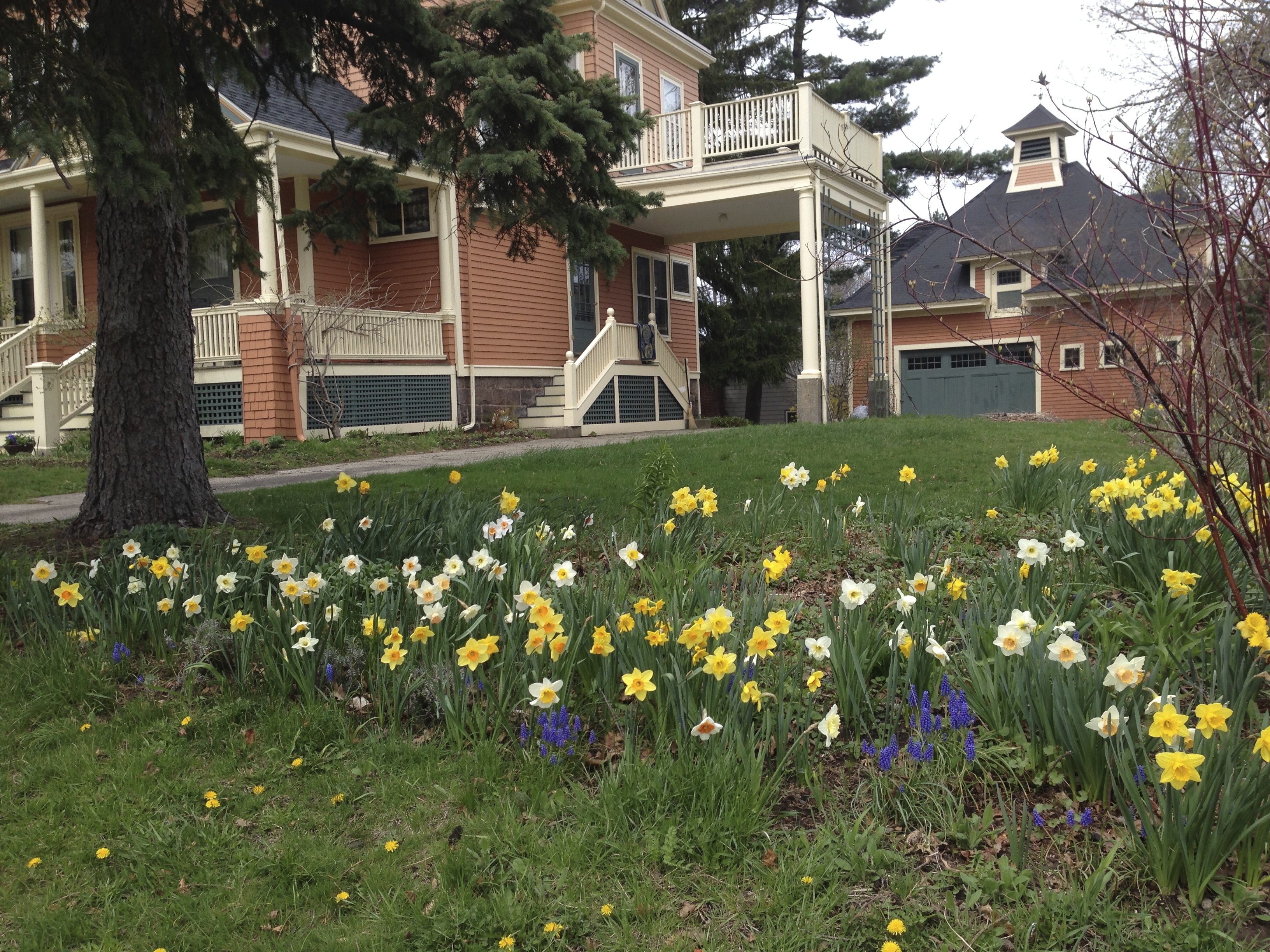
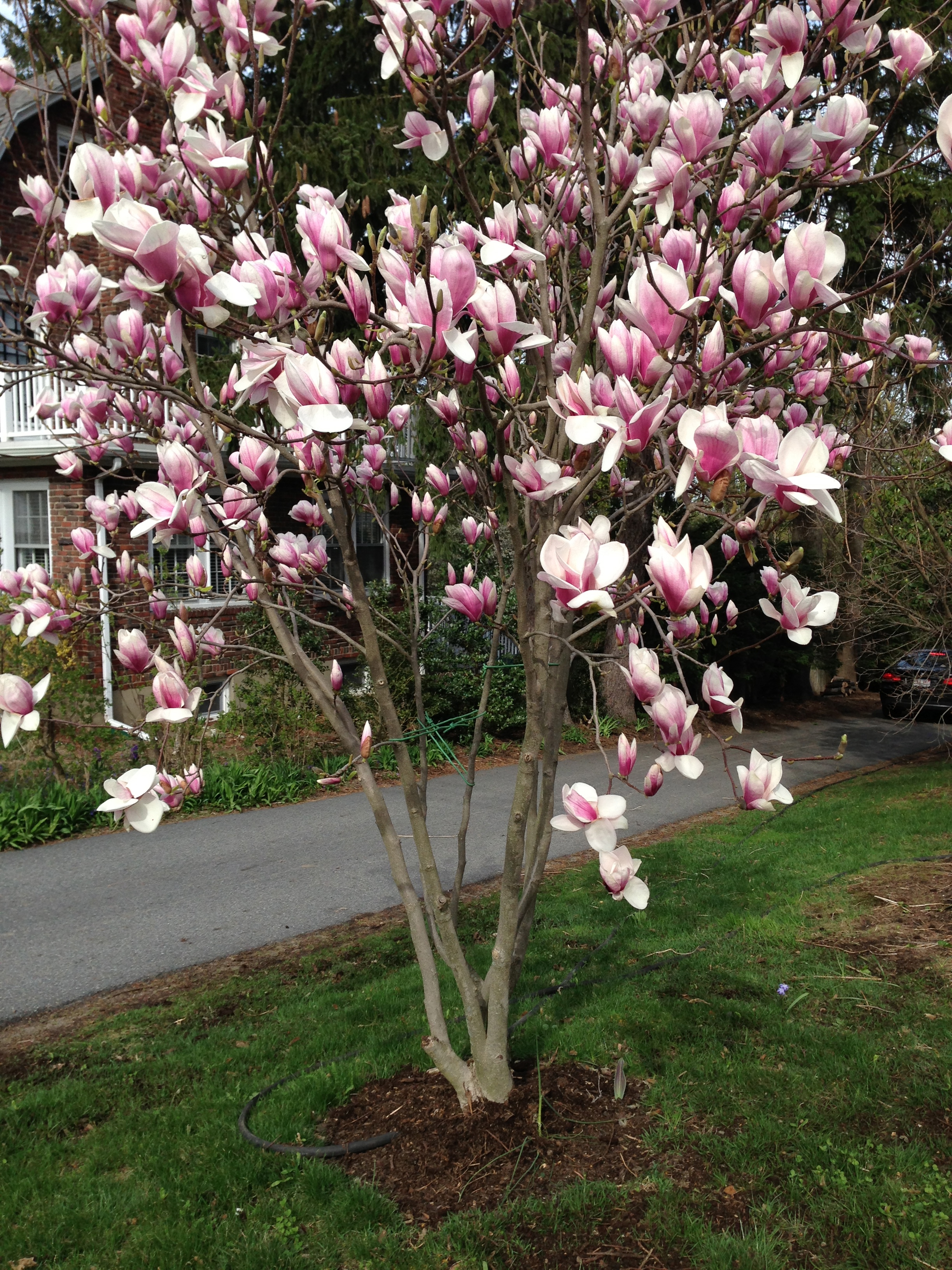
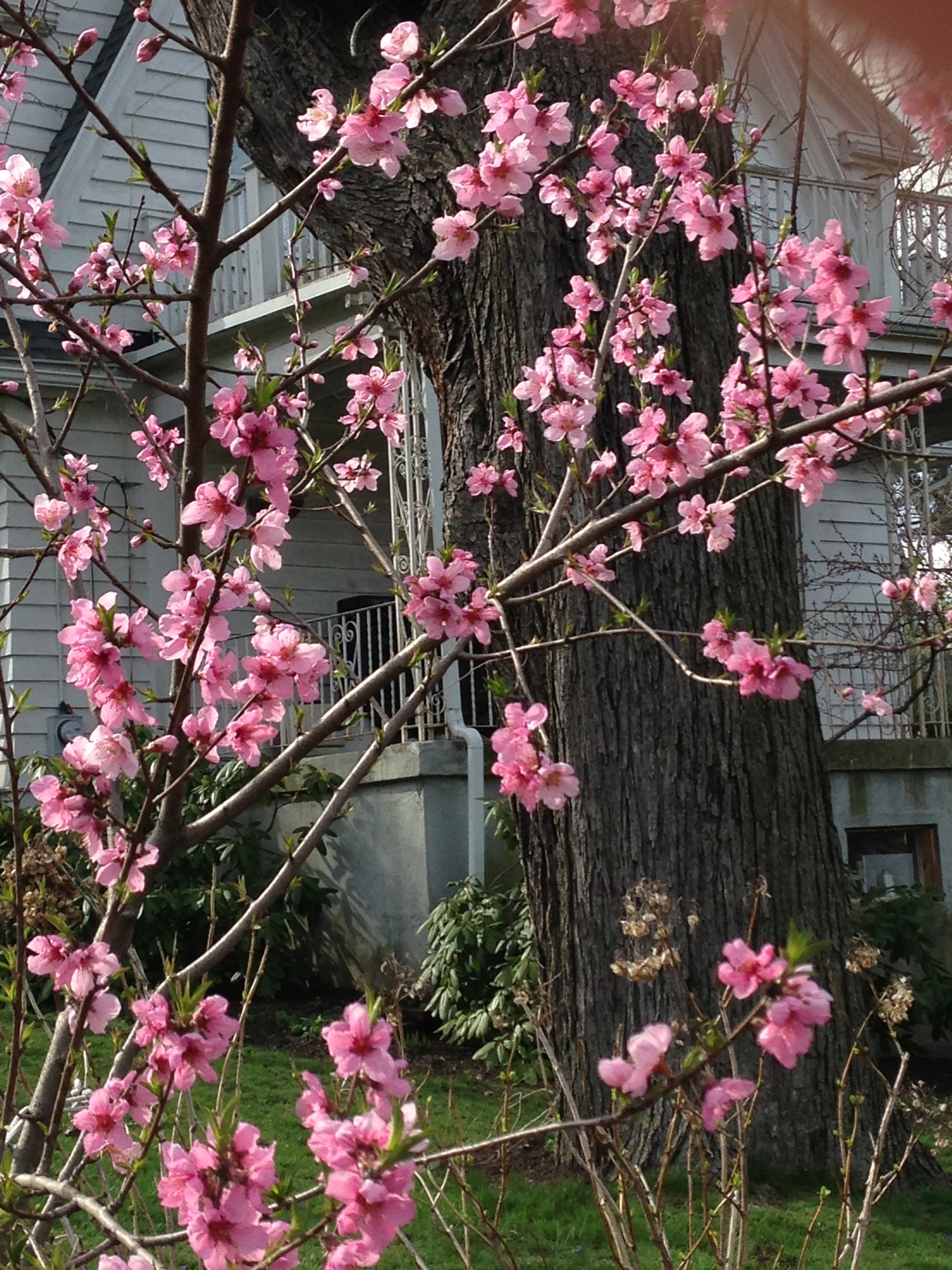
As I walked around yesterday, I witnessed other people walking. I wondered if they were doing the same thing I was doing — experiencing the beauty that is erupting everywhere around us, in the neighborhood of recent, violent danger:


IMG_0642


IMG_0680

IMG_0675


IMG_0676


IMG_0678

And last night, I deliberately returned to my favorite diner (which — as I wrote about yesterday — appeared in almost every TV image during the capture of the suspect).

I went to that diner with people I adore.


IMG_0682

That’s Janet and Ray, whom I’ve known for about 30 years (the same amount of time I’ve known the Arsenal Mall, whatever the hell that means).

I was healing myself, by going back to the Deluxe Town Diner, in Watertown, MA., last night, with Janet and Ray.  I was connecting back with many old, safe memories of that place. With people I’ve known and trusted for a long time.

Janet, Ray, and I were integrating the new, awful information with the old,  as we spoke about the Proximity of Danger. We talked about how the capture took place so close to where we were — as we ate, laughed, and reconnected.

These are attempts to heal.  To figure out ways to feel safe enough to move forward .

That is what I see, every day, in the group and individual therapy work I do.  Whenever I witness people doing that — healing themselves, with the support of others — it moves me, beyond words.

It may be beyond words, but I do try to put that into words, in writing and in speech — here and elsewhere.

Here’s a phrase that came to me, many years ago, when I first starting doing the work I do:

All healing is mutual.

In other words, as we witness other people heal, we heal, also.

That is what I see and hear, all around me.

Thanks so much for reading, here and now.

Categories: personal growth | Tags: , , , , , , , , , , | 18 Comments

Powered by WordPress.com.