First question of this post: What is the Liebster Blog Award?
First answer of this post: It is, apparently, a kind of tag-team award that WordPress bloggers give each other. Last week, frankiedman, a blogger whom I respect and follow here, tagged me for this award.
Here are the “rules of engagement” for the Liebster Blog Award:
Each person must post 11 things about themselves.
Answer the questions that the tagger has set for you plus create 11 questions for the people you’ve tagged to answer.
Choose 11 people and link them in your post.
Go to their page and tell them.
No tag backs!
It took me about a week to respond back to frankiedman’s tag, but today’s the day!
I’m glad to participate in this (despite my I’ve-never-done-this-before anxiety). The format appeals to my natural affinity for questions and answers.
I enjoy games that involve questions and answers. As a matter of fact, I will take any opportunity to turn a regular conversation into a game of 20 Questions, by asking the following question at any point:
“Wanna guess?”
As in, “Hey, something really unusual happened to me today. Wanna guess?”
When I’m at my best at my job (as a psychotherapist), I’m in touch with my natural curiosity about people.
The last place I worked (before my current job) was a day program where we did groups all day. In the last group of the day — which was called “Wrap Up” — we would end that group with a Wrap Up Question, which everybody — staff and clients — answered.
Here are some of the Wrap Up questions I heard and answered during my 12 years there:
What’s your favorite ice cream flavor?
If you were to write the story of your life, what might be the title?
What’s a nickname you’ve had or one that you would give yourself?
What was your favorite book, when you were a kid?
If they made a movie of your life, what actor would you choose to play you?
What’s your fantasy job?
Who is your favorite musician?
Who is somebody you admire?
What’s your favorite movie?
What’s a song you’d choose for your “theme song”?
If you could be any animal for a day, what would you be (and why)?
When I first interviewed for a job at that day program, I liked a lot of what I saw. Attending the Wrap Up meeting sealed the deal for me — I knew I wanted to work there. Why? Because I loved the curiosity and playfulness in that ritual of questions at the end of the day. I appreciated that everybody answered the questions. I liked that anybody could pose the question. I loved the questions. I loved the answers.
So thank you, Frankiedman, for nominating me for this award, and inviting me to participate in a Festival of questions and answers.
For the 11 things to reveal about myself, I’m going to answer those Wrap Up questions I posted above.
My favorite ice cream flavor is Cinnamon Chocolate Chip.
The title for a book about my life? Perhaps “I’m Making This Up As I Go,” (a line from “Raiders of the Lost Ark”).
I never had a nick-name. People have called me “Annie,” every once in a while, but that doesn’t fit for me. I like the idea of the nick-name “Ace.”
My favorite book when I was a kid was “Charlotte’s Web.”
If I could be any animal for a day, I would choose to be a duck, because a duck can fly in the air, walk on land, and swim in the water (and it can quack).
I will now answer the 11 questions that Frankiedman asked when he nominated people:
What’s your favorite food?
Pasta!
Why did you start blogging?
Because I was working on a book that was a combination of a Memoir and Therapy Ideas, and a friend suggested that I try blogging. And it’s a great fit for the way I like to communicate, with freedom, flexibility, and interactivity.
Name one thing you would like to do before leaving this earth.
One long-standing one was to go to a Red Sox World Series game, which I did in 2007. I want to travel to several places including Italy, Greece, and Peru (I’m fascinated by ancient ruins).
Where do you live?
Massachusetts, USA.
What time is it?
7:54 AM as I’m writing this line. It’s the Monday after a Daylight Savings time change. I usually feel very cranky and “off” the Monday after a time change, but so far, so good.
Whats the weirdest thing you have ever eaten?
A recipe I made once with beets and cheese. Never again.
Whats your favorite childhood movie?
“West Side Story.” (I don’t remember any kids movies I saw, and I remember loving that movie so much when I was a kid.)
Why did the chicken cross the road?
Because that was exactly where it was supposed to be.
Are you having fun yet?
Absolutely
Do you have pets?
I have a cat named Oscar.
Whats your favorite animal?
Felines.
Here are 11 bloggers I enjoy reading here, and whom I’m “tagging” to participate in this Liebster Award chain. I’m asking them to answer the same 11 Wrap Up Questions I answered.
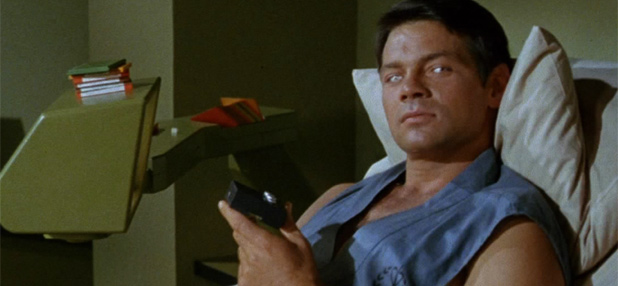
So! I’ve been learning a lot lately about managing tasks and ideas, almost as quickly as this guy:
(For previous references to this Star Trek episode in this blog, see here and here.)
Here are some things I’ve been learning (and re-learning) about getting things done, without feeling overwhelmed. (By the way, if you feel overwhelmed by the length of this list — or by all the links in this post — see #1, below.)
# 1. You don’t have to do everything immediately.
Often, you don’t even have to do anything immediately.
When I think of something I have to do, sometimes I act immediately for fear that I’ll forget it or I won’t do it. And sometimes that immediate action is not only unnecessary, it’s not advisable. (For example, lately I have been fighting the urge to record an idea or make a phone call on my cell phone while I’m driving.)
Have faith that if an idea is important, it will re-occur to you in the future. When you think of a task you need to do, even if it feels urgent, take a breath and allow yourself to ask a few questions about it — How urgent is this, really? How should I prioritize it? When might I have time to do it well enough?
In general, have faith in your process. Try telling yourself “I have all the time I need” (even if you don’t really believe it).
# 2. It can help to write things down.
To Do Lists for tasks and lists of ideas can be very helpful, especially for actions or ideas that (1) you can’t act on it on the moment or (2) you are likely to forget.
I have mixed feelings about To Do Lists. They can help me remember things, but I’m concerned they might become Dreaded Lists of Shoulds and Proof To The Universe about What I’m Not Doing.
Also, I might lose a To Do List, and then spend precious time looking for the friggin’ thing.
However, I do have a big notebook at work where I write down my Really Important Things To Do, and that seems to work. I’ve been trying to use my various electronic devices, too, as additional Ticklers, Reminders, Updates, Notifications, etc. etc. but haven’t quite mastered those options yet.
A Digression (and short Temper Tantrum) about Tasks and Technology
There are SO many choices of how my cell phone, my lap top, and work computer can remind me about stuff!! Eeeek! That gets overwhelming. It’s like technology is getting better at helping us keep track of things at the same exact pace that technology is making us need to keep track of more things.
End of Digression
#3. If there is an idea or a task that you CAN act on in the moment, consider doing it in the moment.
This may sound contradictory with #1 above, but there you go.
Letting go of shoulds and the anxiety about “I have to do this NOW!” can help you act in the here and now (and procrastinate less).
Here are some thoughts that can make it difficult to act in the moment:
This is important, so I have to do it well (or perfectly).
I don’t have enough time!! (Hint: there’s never enough time for perfection.)
There’s a chance for failure here, and that would make me feel worse.
To deal with paralyzing perfectionism, fears of failure, and too-much-to-do, practice giving yourself some slack. Try doing something that’s Good Enough, within a short period of time. Making some progress will help (and you can always go back to it later).
#4. Set limits with other people.
If other people are involved in the tasks you need to do, it’s very helpful to set their expectations. This can do wonders in reducing future anxiety — it’s like an anti-anxiety inoculation!
Here’s how it works. When somebody is making a request of you (verbally or implied), respond with some version of this:
I can do this. I cannot do that.
An expanded version of the above is:
I can do these things (by this time). I cannot do these things (unless I get more resources).
You might worry that the person you are setting limits with will take offense at that. If you are clear, direct, and specific, they will probably appreciate knowing this information. And, they will be more likely to leave you alone while you are getting things done!
You might not set limits or manage expectations perfectly. You might promise something initially which you can’t meet. (I’m getting better at setting limits, but I tend to over-promise and under-estimate the time I need to do something.) If you over-promise or under-estimate, let the other person know as soon as possible, thus reducing your future anxiety and guilt, as well their potential pissed-off-ed-ness.
#5. Allow yourself the room to be “not perfect.”
You may think you need to be perfect, but nobody else expects that from you. (If somebody does expect perfectionism from others, they will be disappointed. If they don’t learn from that disappointment, they will be disappointed — and ineffective at dealing with people — their whole lives.)
You don’t have to get things right the first time — whether it’s managing expectations, writing, or anything else. You can recover from most “mistakes.”
Do you believe that?
Try believing it, and see what happens.
#6. Set limits with yourself.
Give yourself a time limit to work on something. Limit the number of tasks you are going to try to accomplish.
For example, I find it helps me to set a time limit on how long I spend writing my blog posts during the week days, and also limit myself to one blog post per day.
#7. Take care of yourself.
If you feel overwhelmed, take a break. Consider the possibility that you don’t HAVE to do anything right now. (I wrote a long post about that, here.)
If you are physically uncomfortable, change your position or adjust the heat.
If you need food, get yourself some (as soon as you can).
If you need sleep, get yourself some (as soon as you can).
#8. Prioritize.
Recognize that you might have too much to do, and choose one task to do next.
Let go of guilt and judgment about what you’re not doing. (I wrote more about that, here.)
Notice and compensate for distorted priorities.
(Here’s some typical distorting prioritizing from me, which I’m doing less these days:
I need to do this NOW, because if I don’t, this person will be ANGRY, and I’m afraid of that person or I’m afraid I will lose that person.)
Where I work, everybody has too much to do, and that seems to be getting worse as time goes on. People are coming up with creative ways to deal with this.
A nurse I really like came into my office the other day to share how she manages having too much to do, without becoming overwhelmed.
One of the things she told me was, “I ask myself, ‘Which is the task and which is the interruption?’ If I can’t tell which is which, that means I’m overwhelmed. Then, I choose one and proceed with that one. And …. I cannot choose incorrectly.”
I thought that was great.
#9. Recognize that there are some tasks you just don’t want to do.
Allow yourself to have some sort of tantrum about that, if that would help.
(I DON’T WANT TO WORK ON MY TAXES TODAY!!!!!! It’s not fair!!!)
(Better.)
Then, break that task into small steps and take the next one.
(First, I have to locate my documents. How about one document? That seems do-able)
Consider giving yourself a reward for doing a task you don’t want to do.
(I’m going to see the movie “Argo” at 4:30!!)
Also, try to reduce the pain of the actual process.
(Somebody at a group last week suggested working on taxes while listening to music you really love. I’ll listen to music on my headphones while looking for these friggin’ documents.)
Let go of cognitive distortions and the resulting guilt or shame about this:
( What’s the matter with me? This shouldn’t be so hard! I’m such a weird-o about doing taxes. Other people don’t have this problem. I probably shouldn’t even be writing about this in the blog. People are going to think I’m strange! There is NO reason why I haven’t been able to get to this before today!)
(Hmmm. Actually, all of those statements above are false.)
(Better.)
#10. Figure out short cuts and save them, for future easy access and use.
Figure out short cuts that work for you, and try to make these short cuts easy- to-access, especially when you’re in the midst of being overwhelmed.
I’ve been trying to figure out short cuts at work lately, because I have way too much to do. (Like everybody else there.) For example, I’ve been making templates of the notes I need to write, giving myself prompts and choices for information I need to include.
I’ve been trying to figure out short-cuts here, too, so I can blog more quickly and efficiently. For example, I looked for a short-cut, yesterday, for inserting a copyright symbol at the end of a blog post.
It’s even simpler than I expected. You can simply type a copyright symbol. On a Mac, it’s Option + G.
#11. Let go of judgment about how you’re doing.
Tell yourself “I’m doing the best I can” in managing tasks and ideas (whether or not you believe it). Cut yourself some slack, especially if you’re doing something new (or something that feels new, because you haven’t done it enough times or recently enough to feel practiced).
#12. Be aware of your strengths and limits.
Use your strengths whenever you can, and let go of judgment about your limits.
#13. Ask for help, especially regarding your limits.
This may be hard to do, but try this, please.
#14. If you are stuck, choose something easier to try.
If you are having trouble getting things done, choose one task that seems the most do-able in the moment.
#15. Consider editing your list.
Change priorities and even delete things that just aren’t that important to get done. Consider making things simpler.
#16. Pad your list, to give yourself a sense of accomplishment.
Put things on your list that you’ve already started. Add routine tasks. This will give you a sense of accomplishment when you cross them off..
#17. Notice your resistance, letting go of judgment.
If you’re resisting doing something, assume that — on some level — that resistance makes sense. See if you can figure that out. Even if you can’t, try to let go of judgment about the resistance.
Also resistance may mean that you don’t yet have what you need (data, support, completing something else first) in order to continue with your task.
Wow! That list included a LOT of what I know, about a lot of things.
I wonder if there’s anything I have left to tell you for the rest of this year?
Hmmm. Maybe I should do a To Do List about writing future blog posts.
Start a list of ideas for future blog posts. (Pssst! I’ve already done that!)
Keep adding to that list.
Remember that I don’t have to come up with completely new topics. I can keep writing about similar topics, in different ways (hence role-modeling the importance of “practice, practice, practice”).
Consider spending the rest of the year posting more scenes from that Star Trek episode with Gary Lockwood.
This post is dedicated to my wonderful cousin, Lani, because the number 68 is very special to her.
Connection is super important to me. And, while I only truly know my own experience, I’ve gotta believe that connection is also very important to most of you reading this. (Data supporting this assumption: If connecting with other people and their ideas was NOT important to you, why would you be reading this?)
I think a lot about connection — because of the work I do as a psychotherapist and because it makes life worthwhile for me.
Therefore, I also think a lot about the barriers to connection. What gets in the way of human beings connecting better with each other?
I will now make a list of possible candidates.
Barriers to Connection I Have Known
by Ann Koplow
Barrier #1. My own insecurities.
This is probably the biggest barrier to my connecting in a more authentic, uncomplicated, and effective way to other people. As a matter of fact, this might be a very short list. And a very short blog post.
Let’s see, do I have more to say about this?
Well, I could list my insecurities, which get in the way of connecting with other people.
Here are some of them:
I’m not smart enough. There are so many things that other people know that I don’t.
I’m too smart, in some weird way, and people don’t understand what I’m trying to tell them.
I’m just weird, because of my unique set of past experiences, so people don’t understand what I’m trying to tell them.
Okay. Is there anything else I want to tell you about this, today, dear reader?
I guess not.
It looks like a beautiful day outside. I’m going out there, people!
Today, I still have fears that I might be ill with endocarditis.
I am not quite as paralyzed by fear as I was yesterday, when I wrote this blog post before leaving home in the morning.
(I am letting go of judgment, right now, of how confusing that post might have been, and about how I might have included Too Much Information.) (Poof! )
Better.
So even though I’m feeling more centered and calm today, I am still in the challenging and difficult position of waiting for the results of the test for endocarditis.
When I work with people in therapy, I point out to them what a difficult place this is to be: Not Knowing, while waiting for important results. How stressful it is being in a position where you have no control over an outcome which may have a major impact on your life. (For example, waiting to hear if you’ve gotten into the school you want, waiting for the results of a biopsy, etc.)
I often forget to tell myself what I invite my clients to tell themselves: This is a very difficult place you are in. Therefore, be as kind to yourself as possible.
In groups I do, I hear this very common theme: we can see what works for other people, but it is hard to apply it to ourselves.
That reminds me of the following antidote for unhelpful thinking:
The “Double-Standard” Method. Instead of judging yourself harshly, talk to yourself as compassionately as you might to a friend with a similar problem. Also, ask yourself, “How would I react if somebody else did this?”
That gives me an idea for the rest of this post for today. I’d like to focus on antidotes. And when I say “focus on”, I mean “ramble about in that general direction until I get to the point I want to make.”
I am now going to reframe some negative mind-reading I am doing, assuming that you, my reader, might find my writing style annoying. I am going to reframe that into this: “Maybe some people find my writing style … charming!” Oooh! That helped me feel better. I will now reframe again into a more balanced thought: “Some people might find my writing style annoying. Some people might find my writing style charming. Enough people will find it understandable and worth reading.”
Better.
Yesterday, I did two groups at work, and I was very focused on inviting people to look at The Positive.
Okay, time for a digression about a way I think about therapy.
Digression about How I Think About Therapy
I think there is a duality about therapy. I think it is important to leave room for people’s ambivalence — their experience of the positive AND the negative. I think it’s important to leave room for people’s hopes AND fears. The light AND the dark. The good in them AND the not-so-good in them.
I think it’s important for me to show my acceptance of exactly where they are AND have hope with them for what they want to change — in themselves and in their lives. And I work hard to invite people to do the same for themselves.
I think it’s important to invite both sides — the positive and negative. But I want to be careful to invite the negative, especially, because — if I focus too much on the positive — people might not feel seen, with all their pain, shame, and fears about themselves and their lives.
Lots of clients/patients (I don’t like those labels, but I have yet to find a title I like for people I see) tell me that others in their lives don’t want to hear their “negatives” — their depression, anger, despair, fear, or hopelessness. The people I see at work often tell me they feel bad about how other people in their lives react to their pain. This might make them not want to talk to other people. It can cause them to isolate.
And I understand how people who love my clients/patients — or who are otherwise connected to them — might not want to see my clients’ pain. These people may feel exhausted, helpless, or incompetent about what to say.
I think that’s a big reason why people go into therapy, actually, because they are desperate to have the “negative” parts of themselves — their anger, hopelessness, fear, despair stuck-ness, etc. — acknowledged, instead of avoided.
So human beings are both positive and negative, holding both hope and hopelessness — and they are ambivalent about many things. By “ambivalent”, I mean that they have two conflicting feelings. For example, someone might want change AND fear change at the same time.
End of Digression about Therapy in General
In the groups I did yesterday, I wanted to go more towards the positive (while, at the same time, leaving some room for negative thoughts that were in the room, too). But I remarked in myself that I really wanted to focus on antidotes yesterday. I wanted to focus on hope, not on leaving as much room for people’s pain in the moment.
And I named that, in the moment, to the group members.
And I knew (although I didn’t name it) that my wish to go toward the positive was related to my fears about my own health.
And we focused on antidotes, during the group.
As I said in this blog post, I like to use props in therapy. And two of my props are (1) The Bowl of Distortions and (2) The Bowl of Antidotes.
There they are — straight from my office to your screen!
What’s in The Bowl of Distortions? Slips of paper containing the definitions of all 13 cognitive distortions. The Bowl of Antidotes holds slips of paper containing descriptions of ways to challenge these (which I keep adding to).
Yesterday, because I really wanted to focus on the positive, I suggested that we use the Bowl of Antidotes. And each person in the group chose an antidote from the bowl, and talked about it with the group (including details about whether the person used that antidote, how they used it, whether it was useful, what got in the way of using it, how to use it more, and so on).
Here are some antidotes the group members chose from the bowl yesterday:
List the positives. To deal with the tendency to focus on the negative, make lists of good things that are happening, good things about yourself, and things that you are accomplishing (even little things). Focus on what you ARE doing, rather than on what you’re NOT doing.
The Semantic Method. Substitute language that is less emotionally loaded and less judgmental. For example, instead of telling yourself, “I should have known better,” you could say, “I didn’t know that.”
Cost-Benefit Analysis. List the pros and cons of a negative thought (like “I always screw up”) or a behavior pattern (like isolating when you’re depressed). A simple version of this is to ask yourself, “Does this [thought or action] help me?”
Another antidote somebody picked from the bowl was “The Double Standard Method,” described earlier in this post. And this one came up, too, which the group discussed at length:
The “In Case of Emergency, Break Glass” Technique. Prepare for the possibility that when you are feeling at your worst, coping strategies and solutions might be difficult to remember. Write down a couple of things that might be helpful to remember when you are feeling bad, and put that in a special place. Also, consider telling somebody else about these “emergency messages,” so they can remind you.
The members of the group really liked that one, and talked in detail about ways to put this one into effect.
Here’s two more antidotes, which we didn’t pick yesterday in the group, but which I’ve been trying to use a lot the last couple of days:
Reality testing. Ask people questions to find out if your thoughts and concerns are realistic or true. This is a particularly effective response to the distortion of mind-reading.
The So What? Technique. Consider that an anxiety-producing possibility (even the worst case scenario) might not be as bad as you fear. For example, “So what if this one person doesn’t like me? Not everybody is going to like me.” or “So what if I lose my cell phone? It’ll be an incredible hassle, but I’ll be able to deal with it.”
Antidotes can really help.
Thanks for reading. As always, I would welcome any comments on any antidotes you find helpful. And, I love collecting antidotes, so let me know if you have others you like in addition to the ones listed here.
I woke up this morning feeling scared, and my natural preference for that was to isolate.
So I was choosing to write in my blog, rather than to talk to my boyfriend.
I noted that, and realized that it might be more helpful to connect with another person.
So I consciously chose to talk to him, briefly, before coming downstairs to write this blog post.
My wish this morning is to write this post before I leave for an 8:30 dentist appointment.
I know that what will help me to write this blog post quickly is to give this post a title like “Random Thoughts,” because that will quiet down my critical self, and allow me to just write, rather than judging and rewriting as I go.
I woke up pretty scared this morning, immediately aware of my hip pain, and my associated fear that I have endocarditis.
I wondered if this hip pain is “psychosomatic” — that there is actually nothing wrong with me.
I also have been worrying — now that I’ve blogged about this fear, sharing it with who knows how many people — that sharing this might have been a mistake.
Of course, it’s done, and I can’t undo that, and worrying about what is in the past does not help.
But that worrying has been very pervasive since I posted yesterday, so it might be helpful to look at that for a moment.
What seems to help me — when I’m scared — is to identify a link with my past, when I was a scared little girl in the hospital, dealing with heart problems and surgeries, alone without my parents for most of the time. (I write more about that experience, here.)
I had a pacemaker, starting at age 10, and because technology was so new, the pacemakers would break, a lot. The batteries would run down, the wires would break in various places, once the casing of the pacemaker — which wasn’t strong enough — “got permeated by my body fluids” (I swear I remember them using that exact phrase, when I was a kid).
It’s occurring to me now that my family and I, if we had been a litigious bunch, I suppose, could have sued about this stuff. Because, looking at it now, with the eyes of an adult, in a law-suit-permeated society, I guess we could have “made the case” that they were putting these pacemakers in a child before the pacemakers had been tested enough.
But this was at the dawn of pacemaker technology, and we didn’t have a choice. It was either use new pacemakers or lose me. At least, that was the story the doctors were telling, and i think that was a reasonable story at the time.
I remember my mother telling me the story of how the doctors broke the news to them that they had decided to put a pacemaker in me, at age 10. I had a heart stoppage during an observation visit at the hospital, which the doctors had never witnessed before. We think that my heart had stopped twice before, at that point, because I had fainted, once at home and once in the school yard. “Heart stopppages.” That term might not be accurate, right now, because in all three cases, my heart started up on its own again.
But the doctors still reacted very strongly when I fainted at the hospital, and they realized that my heart had stopped (and then started up again). They totally changed the game plan, and decided to put in a pacemaker the next day. My memories are that they had never even mentioned a pacemaker as a possibility before. (Or maybe they had mentioned it to my parents, who then kept that possibility from me. But I don’t think so.)
So after I fainted in the hospital (which I think was either on November 20th or 21st, 1963), the doctors decided to put in a pacemaker ASAP (which was on Friday, November 22).
That is a date which some readers will recognize immediately. November 22, 1963.
Anyway, I will say more about that in a future post.
So to return to my immediate goal this morning — I want to write a post that is helpful (for me) (and, therefore, perhaps for others) and reasonably coherent, by 7:15, which is 13 minutes from now.
So what is it that is most important for me to communicate this morning?
These random things:
When I am more scared than usual, there is usually an association with my past — when I was (apparently) a terrified little girl, alone in the hospital.
It helps me to name that. It helps remind me that I am NOT a scared little girl, alone in the hospital now.
I have skills I didn’t have then.
I have knowledge I didn’t have then.
I have connections I didn’t have then.
While I feel like I’m alone — while I feel like I have to withdraw from others in order to protect myself — I am not alone.
I think that’s what I needed to write this morning. I feel better now and ready to go out into the world, meet my obligations of the day, and bear my fears about my current medical condition.
However, I have seven more minutes!
So I’ll use the time to write down some other, less crucial random thoughts, dear reader.
Here they are:
When I use the term “dear reader” in my blog (even though both my son and my boyfriend don’t like that term), it’s my way of consciously trying to connect.
I’m good at connecting with people. I had to be, to survive as a little girl alone in the hospital.
I love that I’m good at connecting with people. It makes me good at my job, as a psychotherapist. It adds color and value to my life, every day, at work and everywhere else I go.
When I’m more scared, depressed, in worse mood, “more symptomatic” (whatever language I use for feeling worse), I tend to isolate.
And part of isolating is mind reading — projecting onto others my fears and judgments about my self.
One thing I’ve been doing since I blogged yesterday — which was a tough and important post for me to write — has been feeling some shame about sharing things that feel that personal — and medical — with people I know but also many, many people (even though I don’t know how many) that I don’t know.
It has been occurring to me a lot lately that blogging — sharing in the blogosphere — is very much like doing a therapy group. It evokes a lot of the same benefits — connecting and letting go of old habits and fears — as well as the same fears — have I said too much? will people judge me?
Sometimes I feel like a facilitator (group leader) when I’m doing this “Blogging Group”, and sometimes I’m more of a participant.
When I write about illness and fear, I feel like more of a participant.
Being a participant in a group is riskier than being a facilitator/group leader.
I have three more minutes!
It’s helping me to write down these thoughts.
There are lots of other things that I might write here, because I have lots of thoughts and have had a rich and complex past.
But what feels most important for me to say?
I guess I want to let you know that I have been projecting some old fears and hospital experiences on to you — my readers.
I’ve felt scared because I told you, yesterday, about my fears of having endocarditis. And that got me into a whole series of scary thoughts, which remind me of when I was a kid in the hospital, with a failing pacemaker.
Here are some thoughts that came up when I was a kid thinking something was wrong with me medically (that my pacemaker was failing), and which come up now (that I am afraid I have endocarditis):
Should I tell other people about this?
If I do tell other people about this — that I’m afraid that there is something wrong with my health — something that might be life-threatening — there are some risks.
I might be wrong. If I’m wrong and I got other people scared, I might lose them. They might get annoyed that I caused them unnecessary worry. I might lose credibility with them. “She’s the girl who cried ‘Wolf!’ We stopped listening to her!” And I did feel, when I was a kid, that I had to be right, 100% of the time, when I let people know I feared that my pacemaker was failing. If I was wrong one time, I believed THAT is what would stick — and they would never believe me again. But if I didn’t say something, I might die, because of a faulty pacemaker, which I was aware of, because my heart was skipping, but which was intermittently malfunctioning, so that the doctors could not replicate the problem at first. So i DID need to say something, But I might be wrong.
So being wrong was/is very scary.
I might be right. If I was right, I would need to have surgery (or — if I’m right about the endocarditis, I’ll need to leave work for a while and be on IV antibiotics for 6 weeks, and this will have been the fourth time, and last time, they said they might need to take some drastic measures, like extracting all my teeth) (NO!!!).
So being right was/is very scary.
Okay, I ran three minutes over. I think I can still get to my appointment on time.
I am not reading this over, at all, dear reader, before I post. I might, later, read this over and make some very basic corrections, if my fear is that I’ve lost you too badly. I want you to understand me!
“To dominate the impossible in your life” is a line I really like, from a song I really like (“The Rhythm of the Saints”), from an artist/songwriter I really like (Paul Simon).
I’ve used that line, many times, to describe dealing with a situation that seems unbearable.
How to bear the unbearable?
Sometimes, you just have to.
You may bear the unbearable by looking at the situation differently — by telling the story differently.
And telling the story differently is often a wonderful coping strategy.
Sometimes, though, it can involve denial — choosing not to see part of the truth.
On the other hand, how can we see all of the truth of a situation? The truth is usually open to interpretation. As I wrote way back on Day 11, in You Might as Well Be the Hero of Your Own Life , we make choices whenever we tell stories. And our lives (and we) are so complex, we always make choices when we tell our own story.
So we have to leave things out. Is that always denial?
And this makes this whole issue of “the truth” even trickier: As we do our best to make meaning of life, we will use some cognitive distortions .
I often refer to Cognitive Distortions in my posts here. Cognitive Distortions (a term used by Cognitive Behavioral Therapy) are just human ways of thinking. That’s why I don’t like the word “distortion.” (Yes, I have a judgment about that.) (Yes, I have judgments about many things.) (I’m human.)
In my work as a therapist, I often choose to use the term “Automatic and Unhelpful Thoughts,” instead of the term “Cognitive Distortions.”
But whatever I call them, I think those thoughts are inevitable, at least for most humans I’ve met.
Especially “Fortune Telling.”
We don’t know the future, but — in order to feel safe enough — we will make predictions about the future, based on our past.
I have yet to meet a human being who does not use Fortune Telling.
And I have “debates” with people I work with — in individual and group therapy — who argue that cognitive distortions are useful.
Of course, they’re useful, in some way. Why else would we do them, and keep doing them?
However, it’s important to notice when trying to predict the future gets in our way. When it makes us anxious. When it holds us back from pursuing something that might help us. When we automatically go to the worst-case scenario (using a particular “distortion” called “Catastrophizing”).
So how do we figure this all out? How do we use what we know, from the past, to feel safe, without restricting ourselves with fear?
How do we dominate THAT impossible in our lives?
So far, this post (except for the reference to Paul Simon and his song) has been all about generalities.
I think people learn better from the specific, so I’m going to give you some specifics now, from my life.
The on-line article I’ve linked to, above, is a pretty good one, I think. You may not want to read it. Maybe you do.
If you do read it, I’m going to suggest something. After you read it once, read it again (maybe pretending that you just received this diagnosis) and look for the things in that article that sound reassuring. Then, read it again, looking for the things that sound scary.
Because both of those things — the reassuring and the scary — are there.
The condition is really rare, so a lot of people don’t know about it. (As a matter of fact, I once went on a date with a cardiologist, who did not know about this condition. When I told him about it, he made a very common mistake about it — confusing it with a much less rare condition. I corrected him.) (That was our first and only date, by the way.)
People with my heart condition can lead very normal lives — so normal that sometimes it’s not even known they have this condition until after they die (sometimes at a very old age).
People with my heart condition can be quite sick, or can become quite sick later in life.
Once, when I was about two months pregnant with my son, I stumbled across a Very Scary Article about my heart condition, which said that women with my condition should not become pregnant because pregnancy would seriously weaken their hearts.
When I called my cardiologist in a panic, this is what he said to me, “Ann, you have such a rare condition, that any article about it uses a sample size that is so small, that the results are suspect.” And he told me that he did not agree with the article, and he made a great case for why that was. So I stayed pregnant. And I have an amazing 15-year-old son.
Thank goodness that I believed my cardiologist. Because I could have easily decided that he did not know what he was talking about — because, after all, he was making a recommendation based on a too-small sample size, also. I might have left him for the care of a cardiologist who did believe that I should terminate my pregnancy.
But I didn’t.
But while I was pregnant, how could I make the “right” decision? I would have to have been a fortune-teller. I would have had to have been psychic.
Which I wasn’t.
So I did the best I could.
And it was the “right” decision. In retrospect.
That’s what’s so tricky. There is often no “right” decision. We just do the best we can, with the information we have, believing in the experts we trust.
And if we make a decision that turns out to be the “wrong” one — that is, the experts weren’t correct, the outcome implies that we “should” have done something different — we need to make peace with that, too.
Otherwise, we will be hindered — and sometimes tortured — by the past. The past will get in the way of us living in the moment.
Which of course, happens to all of us humans.
Here’s an “antidote” I suggest to people, about making peace with the past.
Look at the Context. Instead of automatically blaming yourself for a problem, think about the other factors that may have contributed to the situation. If you regret a previous action, consider that you might have been doing the best you could at the time.
Anyway, I was going to write in this post about a particular aspect of my condition that I’m finding difficult to bear right now.
It’s not mentioned in the article I linked, but people with my condition, if their heart valve leaks (which it often does) are prone to endocarditis.
(By the way, I’m assuming that some people who are reading this do not want to read the links here, for their own reasons. For some people, the links might be TMI — Too Much Information. That is completely okay with me. And, I hope, you can still read this post without reading the links and still get something out of it.)
Anyway, I have a leaky valve.
Therefore, I am prone to endocarditis.
It’s a potential danger, which my wonderful cardiologist communicated to me, when I was in my 20s.
That was a communication I received, despite my human wish to deny that as a possibility.
So, when I was 7 months pregnant with my son (20 years after my cardiologist communicated his concern to me), and I developed a fever, I asked to be tested for endocarditis, for the first time.
Now, we (me and my medical team) thought my request to be tested was kind of weird, because (1) I had never developed endocarditis before and (2) there was no reason to believe that I had endocarditis.
I did not have any symptoms of endocarditis, except a fever.
I had a fever because I had the flu.
But, my cardiologist, when I called him and told him, “I would like to be tested for endocarditis,” said the following:
“Well, why not? It couldn’t hurt.”
When I went to the hospital to be tested, this is what the Endocarditis Specialist said to me,” You have a fever because you have the flu. So, there is no reason for me to test you for endocarditis. You’ve never had endocarditis. However, since you’re here and your cardiologist has ordered the test, I will do the test.”
And when the results of the test came back, I got a call from the hospital as follows, “Get in here right away. You have endocarditis.”
And the test caught it so early, that I was fine. My heart had no damage.
However, the treatment was that I needed was to be on IV antibiotics for six whole weeks. And the doctors told me that the medication they needed to use might affect the hearing of my unborn child. But they needed to use that medication.
I had to dominate that impossible, and choose the treatment.
The day I got off of the six-week regimen of IV antibiotics, was the day my water broke.
My baby did not have any hearing problems.
My heart was not damaged.
Okay, here is where the story gets even weirder.
About six or seven times since that first bout of endocarditis, I have asked to be tested for endocarditis again. Each time, my symptoms have been different. Each time, the doctors could have said, “There is no real reason to test you for endocarditis.” But they didn’t say that. They tested me for endocarditis.
Two of those times, I had endocarditis.
Each time I had endocarditis, we caught it quickly enough that my heart was not damaged.
The other times, I was “wrong.” I did not have endocarditis.
Several doctors who know me, when they tell my story (sometimes in front of me, to medical students) describe me as “amazing.” They say, “It’s like she’s psychic.”
But I’m not psychic. Nobody is psychic.
I guess the way I make sense of this story is that I must be incredibly tuned in to my health and my body.
But sometimes I’m wrong. And I get anxious “for no reason.”
About two weeks ago, I started to wonder whether I had endocarditis.
There were lots of reasons why this might not be true. The symptoms were this: I have a pain in my hip.
That’s it.
There are lots of reasons why my hip might be sore. I walk a lot. I just turned 60. I’ve been wearing boots that don’t give great support.
Lots of people have hip pain.
I don’t have a fever. Before, when I’ve had endocarditis, I’ve had a slight fever.
After I first got the idea that I wanted to be tested, I talked myself out of it.
Which I’ve done before. Sometimes, when I get the fear of endocarditis, I decide not to get tested.
So, when this thought has come into my head over the last week or so — “I am afraid that I might have endocarditis,” I talked myself out of it.
I did not want to get tested. I wanted to believe that I was just imagining things.
Because I have, many times before.
However, after talking to several experts and friends, I decided to get tested yesterday.
But coming to that decision — weighing all the factors, trying to figure out what the truth was, trying to balance my fears about the future and my knowledge of the past, telling myself I was not psychic (which is true) after having had all these experiences where a “psychic” feeling had prevented severe heart damage, figuring out how I can live my life safely but not be paralyzed by fear — was really, really hard, dear reader.
It felt like I was trying to dominate the impossible in my life.
I made my decision — I got tested.
I feel fine about that decision.
I feel fine as I am writing this post.
My boyfriend, Michael, thinks I don’t have endocarditis. He’s been pretty psychic, himself. He predicted, in 2010, the outcome of the last presidential election, when nobody was predicting the winner.
I will find out in a few days.
Whatever the outcome, I will work hard NOT to think in terms of “right” or “wrong” decisions — that is, whether I “should” have gotten the test, or not. Whether I “should” have gotten the test earlier.
I plan to tell myself that I did the best I could, with the information I had.
Phew.
I will let you know, when I get the results.
Thanks for reading, so much today!
And I wish you all the best, in dominating the impossible in your life, whatever that might be.
This is going to be a short post because I had a very long day.
And all I want to say today is how my day started and how it ended.
My day started with my sobbing, before I left for work, because I had allowed myself to get in touch with some fears about my health, which I had never really allowed myself to feel before. These fears were a collection of old fears from my childhood and some current fears that I do need to live with, but often deny and suppress. And this morning, because I was talking about these fears to somebody I trust, I allowed myself to feel the fears in a new, very primal way.
And I sobbed.
Then I went to work and lots of things happened.
Then, tonight, I went to a meeting to start planning a high school reunion. I traveled about 20 miles and about 45 years back in time, to meet with some people with whom I spent several formative years, but whom I have not seen for quite a while. When I was traveling those 20 miles to the meeting — and because the memories of the past were right there — I had some fears about that meeting. I thought that perhaps these people at the meeting might have judged me in high school and might also judge me tonight.
(I mean, this may be the Year of Living Non-Judgmentally, but we’re talking High School, for cripe’s sake!)
But when I got to the meeting, I realized that everybody there wanted to be there because they felt an urge to reconnect. And people were as kind as could be to me.
And I was happy to be there with them and to start planning our high school reunion, together.
So, dear reader, that was how my day started and how my day ended.
And I’m happy to be here, now, too. Thanks for reading.
It’s Monday, I’m anxious about a few things, and it would be helpful to post some helpful reminders to myself today.
I find Post-It Notes useful in such situations.
Post-It Notes are among several props I use in my work. (Other props have included (1) magic wands, (2) clickers to help people notice cognitive distortions, and (3) baskets that get passed around at groups, holding slips of paper with questions or information.) As I said to my BF Michael last week, “Perhaps I’m the Gallagher, or even the Carrot Top, of Therapists.” (Michael has some judgments about prop comedians, so he looked dubious.)
Here are some helpful reminders for me to post, today.
Those tasks you’ve been procrastinating? Let go of shame and take a first step.
Set limits, by being clear about what you can and cannot do right now.
It’s okay to sing out loud when you feel like it.
At this point, I would like to present some data I recently gathered in support of # 3, above.
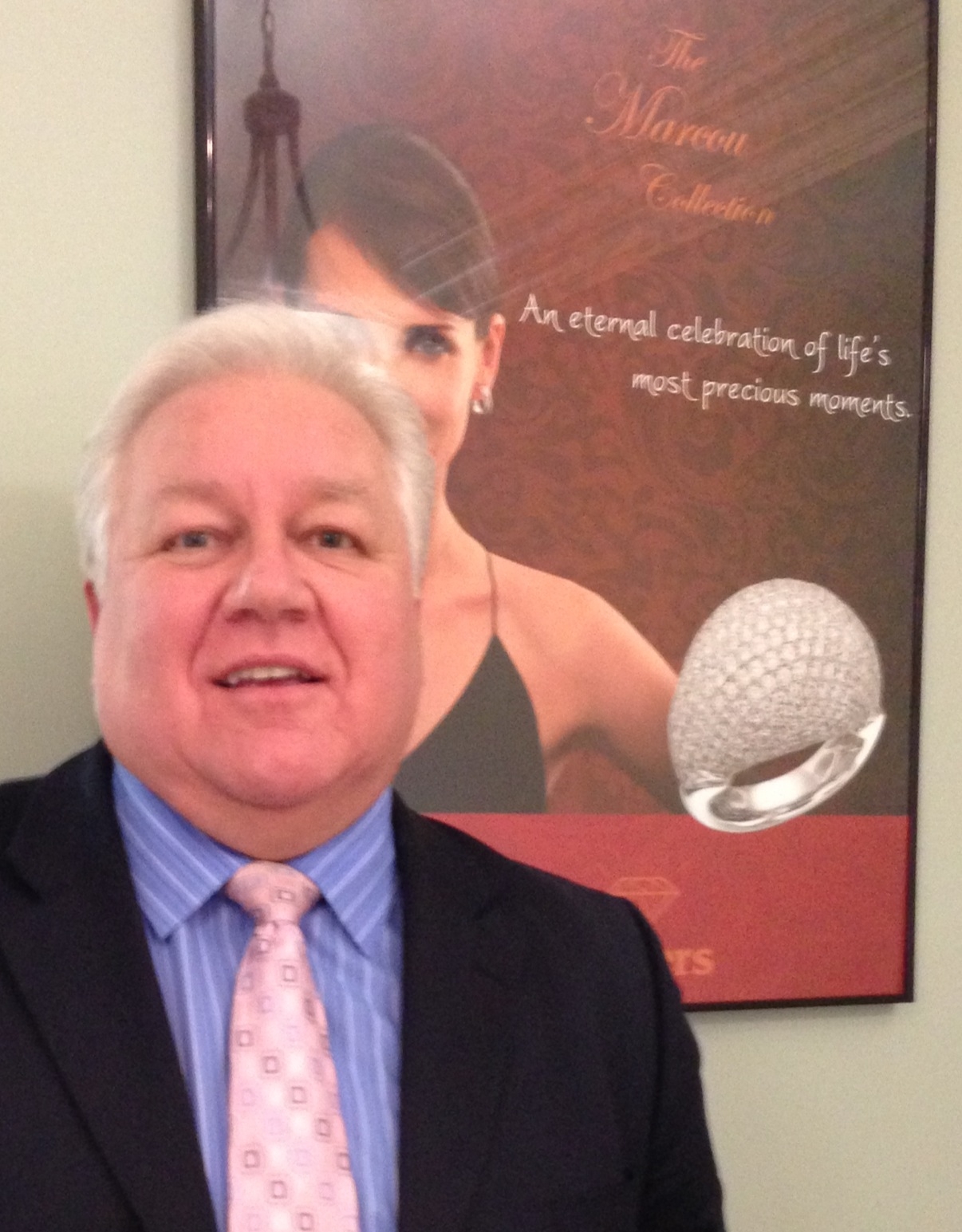
I collect unusual (not expensive!) watches, so another position on my Personal Support Team is Watch Battery Replacement Expert. (For posts about other team members, see here and here.) Watch Battery Replacement Expert has been an empty position for a while, so this past weekend I scouted local sites for candidates. And I found this gentleman:
This is Doug Marcou, from Marcou Jewelers. I’m sure he’s going to be a fine Watch Replacement Specialist. What I also appreciated about my first encounter with Doug was that, while I was waiting, he was singing along to the tunes that were playing in his store, with some wonderful joie de vivre.
So, now, when I feel like singing, I can challenge self consciousness with that memory of Doug singing out — in fine voice and in fine fettle — replacing that watch battery in his store.
So, thanks to Doug, thanks to Gallagher and Carrot Top, and thanks to you, too, dear reader.
Self disclosure — what I reveal about myself — is something I think about a lot, in my work as a group and individual psychotherapist and, now, here in the blogosphere.
Some people who comment to me about this blog have said, “You are so brave, revealing so much of yourself!” I don’t feel brave about what I am writing here. As I’ve said in several other posts, I choose what to write here based on What Will Help Me To Write, in the moment. One might call that selfishness, not bravery.
At the same time, I recognize that it does take courage for people to expose themselves — because exposure increases vulnerability.
And I do feel fear, at times, after I launch a post into the Blogosphere with the “Publish” button. Sometimes, before clicking that Blue Square of Publishing, I hesitate. And after the launch, several fearful questions can arise — ones that I witness people experiencing in group therapy — such as, Did I reveal too much? Have I put myself in some danger now? Will I lose some people? Will I get hurt? Will I hurt others?
In my work, I am not a “blank slate” kind of therapist. My style is to self disclose, in a thoughtful way. I do let people know what I’m thinking, authentically, usually focusing on their issues — on their journey. When I self-disclose as a therapist, I often ask myself this question first, “Who is this for?” and I let the answer, “For the other person” help guide my choices in self-disclosure.
But the truth is that the answer to that question, “Who is this for?” isn’t a simple one, because any self-disclosure I do is also for … me.
I also guide and limit my self-disclosures as a therapist in another way. I don’t tell people personal details about myself and my life outside of my work. I reveal “existential” information about myself — that is, how I experience and deal with primal, human issues, like dealing with loss, self-doubt, fear, the need to connect with others, and so on.
And I have heard from many clients, patients, and group members — people I’ve worked with in different ways — that the way I self-disclose has been very helpful for them.
But my self-disclosure as a therapist is something I have some fears about, because there are no clear rules. Or — especially in the Earlier Days of Psychotherapy — the Rules of Self-Disclosure can be very rigid, like “Thou Shalt Reveal NOTHING!” And psychotherapy is not a science, folks, as much as some practitioners may want to think that it is, or believe that it’s getting closer to a science. So, to a certain extent, those of us in the Therapy Biz are all making this up as we go along. (Mind-Reading Moment: I’m imagining other therapists reading this paragraph and getting angry.) (Catastrophizing Moment: I’m imagining losing credibility in the Therapy Biz because of what I’m writing here.)
Phew! As usual, catching myself Mind Reading, Catastrophizing, or engaging in any other cognitive distortion — like I just did in that last paragraph — helps me to let go of fear. And I feel better!
So where was I?
Here’s some self disclosure. When I ask myself “So where was I?” I am really asking, what did I want to communicate here? That is, What was my wish, my intent for this communication? Because that guides what I choose to write, even if I “veer off” along the way with extraneous thoughts.
Here’s some more self disclosure. I am a lot more forgiving of other people’s imperfections or humanity than I am of my own. People I witness often apologize to me about their asides, their digressions — how they get “waylaid” when they are telling a story, by “extraneous” thoughts. When they apologize, I often say, completely authentically — “That’s the way people tell stories.”
But yet, I have trouble forgiving that humanity — that we are not perfect, linear story tellers — in myself.
Which reminds me of one of the Antidotes (to Cognitive Distortions) I’ve been collecting:
The “Double-Standard” Method. Instead of judging yourself harshly, talk to yourself as compassionately as you might to a friend with a similar problem. Also, ask yourself, “How would I react if somebody else did this?”
So, to go back to that “Where was I?” question — What was it I wanted to reveal here today? What did I think would help me to write? Which also includes this: What did I feel a yearning to communicate to you, my reader, today?
Here are some things I wanted to self-disclose today:
I wanted to let you know about other important members of My Team (people who help me survive in this world by giving me personal or practical support). The team members I wanted to tell you about today include Bob and Laurie, who work at the Pacemaker Clinic, where I go for periodic check-ups.
I wanted to let you know that I’ve felt connected to Bob for several years, and that I appreciate, so much, how he treats me with respect.
I also wanted to let you know that, until Thursday (when I took this picture), I feared working with Laurie, because I did not feel connected with her. Because her style is so different from mine, I projected judgment onto her, and mind-read that she was thinking negative things about me, like “This woman is a pain-in-the-neck patient.” “She doesn’t know what she’s talking about.”
I wanted to let you know something else about Laurie and my encounter with her on Thursday: I expected to work with another person at the clinic that day, named Melanie, whom I’ve known, trusted, and pretty-much-loved for over 20 years, and when Laurie came to get me for my test, I knew that I was showing my disappointment. As Laurie was putting the electrodes on me for my pacemaker test (which, honestly, has scared me for each of the hundreds of times I’ve had those tests before), I felt so lousy — with disappointment, anger, fear, and disconnection — that I decided to do something new and be authentic with her. So I said, ” Laurie. I don’t feel a connection to you. I wanted to let you know that. I also wanted to say something, that feels important, to myself and to you, right now. It used to be important to me, when I was a kid, to feel connected to everybody who treated me medically. But I’m not a kid any more. I don’t need that connection with everybody who treats me.”
I don’t know if Laurie understood everything I was saying to her, but she was authentic with me, too. She told me, in her own words, “I know you don’t feel connected to me. I know you feel much more connected to the other people here. That’s why I offered you the chance to wait for Bob to be available. Not everybody feels connected to everybody else. Some people feel connected to me, others don’t.”
And that exchange with Laurie was one of the best things that happened to me that day.
It was also great to see Bob after my test (which showed that everything was working great, by the way) and to blab with him a mile-a-minute about birthdays, vacations, What’s Going On With My Pacemaker, etc. etc.
And when I asked if I could take a picture of both Laurie and Bob and put them in my blog, they both seemed pleased to oblige.
I also wanted to tell you that after I took this picture of Laurie and Bob, I met with Dr. Mark Estes, who is one of two Crack Cardiologists on my team.
The Lead Cardiologist on My Team is Dr. Deeb Salem, whom I’ve been working with for over 30 years and who I pretty-much-adore, because he, from the moment I met him — when I was interviewing cardiologists after I decided to leave Children’s Hospital, where I had been treated from birth — showed me how smart he was and also treated me with respect. He let me know that he would treat me as a partner and an equal if we worked together.
And — like they did in my first encounter with my mechanic, Mark — all my Trust Indicators came up green when I first met Dr Salem. And Dr. Salem has been incredible — the most appreciated Medical Team Member I could ever imagine — ever since.
But I wanted to tell you, today, about Dr. Estes. Dr. Estes — because his style is different from mine — is also somebody with whom I’ve Mind Read in the past. That is, I’ve projected judgment onto him, specifically fearing that he might experience me as a pain-in-the-neck patient. And this is totally unfair to Dr. Estes, which I’ve known before, but which hit me with a burst of new understanding on Thursday, when he sat down and talked to me for about fifteen minutes after my pacemaker test with Laurie.
Dr. Estes is a very smart, very well-respected pacemaker specialist. He is also kind, thoughtful, and — above all — a very modest guy. As he self-disclosed to me on Thursday, “It’s my Quaker background.” He did not want me to take a picture of him and feature him in a blog post because, as he said in his own words, I don’t want to do anything that seems like self-promotion.
Dr. Estes also let me know, in new ways on Thursday — which I was able to take in because of the work I’ve been doing on self-acceptance — that he really appreciates me as a patient. He acknowledged that other doctors might find me a handful, because — as he said in his own words — I’m intelligent, I ask lots of questions, and I am complicated medically — but he said this to me, very clearly, on Thursday: I really enjoy working with you, Ann, exactly how you are.
And those encounters I had at The Pacemaker Clinic on Thursday felt so important to me, so liberating, so moving, that I walked away from that appointment, with tears in my eyes.
And I have tears in my eyes, now, dear reader.
Okay. My work here is done today.
Thank you so much for witnessing, as I self-disclose along this always surprising, team-supported journey.
P.S. I don’t think I will hesitate much before pressing “Publish” today.
Okay! Here’s another in what might be a continuing series of things I’m learning this year — at such an accelerated pace, that I’m reminded of Gary Lockwood’s character in “Where No Man Has Gone Before” from Star Trek (The Original Series).
Damn! I still can’t find a clip that shows Gary’s character learning so rapidly that he speeds through pages he’s reading, really fast. (Although the clip which I ‘ve linked to, above, does show his rapidly acquired mastery of levitating a Cup of the Future, which is probably especially tricky.)
Since I can’t show you the clip I want right now, I’m searching for a good descriptive metaphor for how quickly that Star Trek character learns new things. Like wildfire? Like Tom Cruise flying some jet in “Top Gun”? ( I’ve never seen “Top Gun”, but that still pops up when I’m trying to think of a metaphor for speed.) Like some political party member talking to the media about things that are wrong with the other party?
No matter what the metaphor, here’s the deal, dear reader: (1) Gary Lockwood in Star Trek learns really quickly, (2) I’m learning lots of things (although not quite as quickly as him), and (3) you can read more about all that (with a different clip from that Star Trek episode) here.
Without further ado, here are more things that I’ve been learning lately, although not quite as rapidly as a Scary, Too-Smart-Becoming Guy on a 60’s TV show:
Projecting fears and critical self-judgments onto other people really screws up a connection in the moment.
Fears about other people’s reactions (anger, envy, fragility) can restrict you, big time.
Worries about whether you’ll be able to sustain or hold on to a current situation, feeling, or thought can really get in the way of appreciating the current moment.
Feeling depressed seems related to focusing on regrets about the past; being anxious seems related to focusing on fears about the future.
It’s really difficult to calibrate and figure out How Important You Are to somebody else (or to a system or an organization).
Taking any action related to How Important You Are can feel very risky, because of #5, above.
You can often do a good enough job at a current task without access to more knowledge or the perfect tools (or the perfect clip from a TV show).
If you don’t have the knowledge or tools to do a job that’s good enough, you can say so, and then find out what you need to complete the task.
That’s all, for now. I hope you enjoyed reading this so much, that it went by as quickly as (fill in your favorite metaphor for speed, here).