Posts Tagged With: Labeling

Day 341: Friendly Reminder(s)

The title of this post was inspired by an e-mail I got from somebody, last week.

This person had e-mailed me a question, asking about possible therapy supports for someone. When I didn’t answer back within a day, she sent me another e-mail, starting with the title phrase — “Friendly reminder” — asking for the information again.

I took note of that, because quick responses are something that matter to me, a lot.

I sometimes feel a lot of stress, when I don’t get back to people quickly enough. That’s true at work and elsewhere (including here in the blogosphere, I must confess).

Of course, that leads to the question, “What is quickly enough?”  My supervisor, at work, has suggested that I ease off on myself, and allow myself more time and room to get back to people.  That’s always an important, friendly reminder from her,  because, in my work, a lot of people ask me questions, looking for help, every day. And I CAN’T get back to everybody as quickly as I would like. It’s impossible.

That’s an ongoing struggle for me — to allow more space and time for myself to respond.  I need to remind myself that — while I’m not responding back as quickly as I would like to — it’s the best I can do. I’m only human.

But I struggle with that, a lot.  And when I’m feeling down about myself, I label myself as “not responsive enough.” (And other harsher things, which I won’t name here.) (However, I will direct you to this list, for a friendly reminder about cognitive distortions including “labeling.”)

(Strangely enough, in my two yearly reviews, “responsive” was a word that people used, many times, describing me. That surprised me, each time, because it didn’t match my own wishes and expectations for myself.)

One thing I’ve considered: maybe I want to respond quickly to people because that’s what I WANT FROM OTHERS.

I’m sure that’s true.   And my own yearning for quick responses? It’s based on old feelings and experiences.  When I was a kid, I needed people to respond quickly, when I was in pain, and they didn’t.

I’m sure I’m not alone, in that experience (even though the circumstances may vary).

Another thing I’ve noticed: I’m more forgiving of other people’s non-perfect responsiveness, than I am of my own.

I’m sure I’m not alone in THAT, either.

So, to get back to the beginning of my post:  Somebody, last week, sent me an e-mail saying “Friendly reminder,” when I didn’t respond to her initial request within a day.

And this was my reaction to that:

Wow!

And what did  “Wow!” mean?  Lots of things, including:

  • Gee!  She has some nerve, asking for me to respond that quickly.  Doesn’t she know I have LOTS of requests, every day?
  • I wish I could ask for something I need, with that kind of nerve.
  • That’s really an effective way to express that need. (My proof of that:  my first, annoyed response faded within seconds).
  • Obviously, her need was more critical than I realized at first.
  • I want to learn from her, and use that phrase when I’m feeling the need for a quick response.

And then I responded back to her, very quickly, and I was happy to do so.

Okay!  It’s time to look for photos on my iPhone, to adorn this post before I end it.

Actually, when I take a photo, it’s a friendly reminder to self: “Share this image with somebody, some day.” I do give myself space and time, with those reminders.  I don’t pressure myself. I know I have all the time I need, to decide when to share those images.

Here are the photos whose times have come, today:

Friendly Reminders: A Photo Essay

by Ann
Image

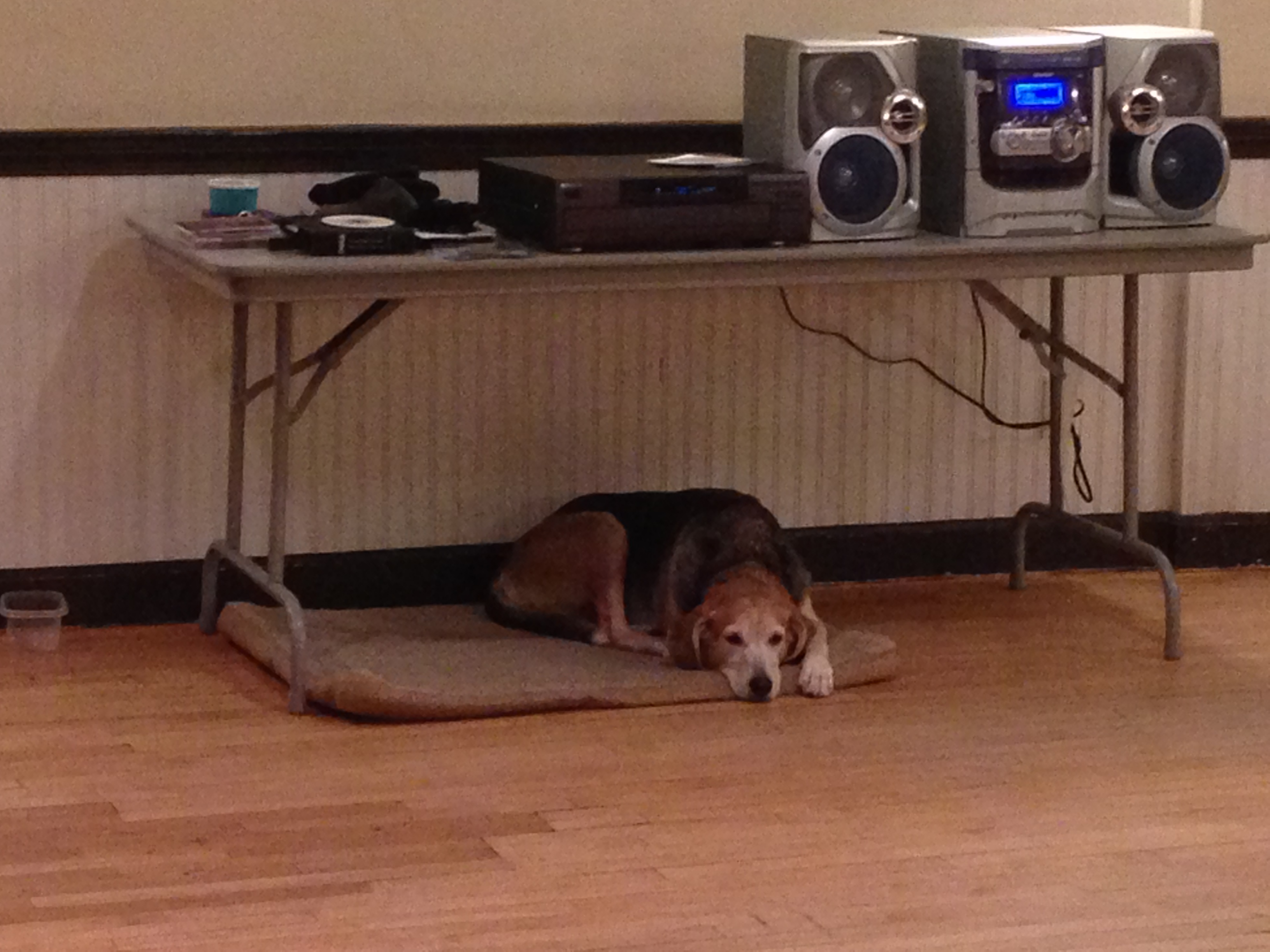
That photo is a friendly reminder that our last Argentine Tango lesson is coming up, this Wednesday.  That’s Chloe, the instructor’s dog, who has been attending dance classes for many years. Because she’s watched so many dancers, I’m assuming Chloe may be better* at the Tango than I am, at this point.

Friendly reminder to self: Decide whether to sign up for more tango lessons.

.
Image

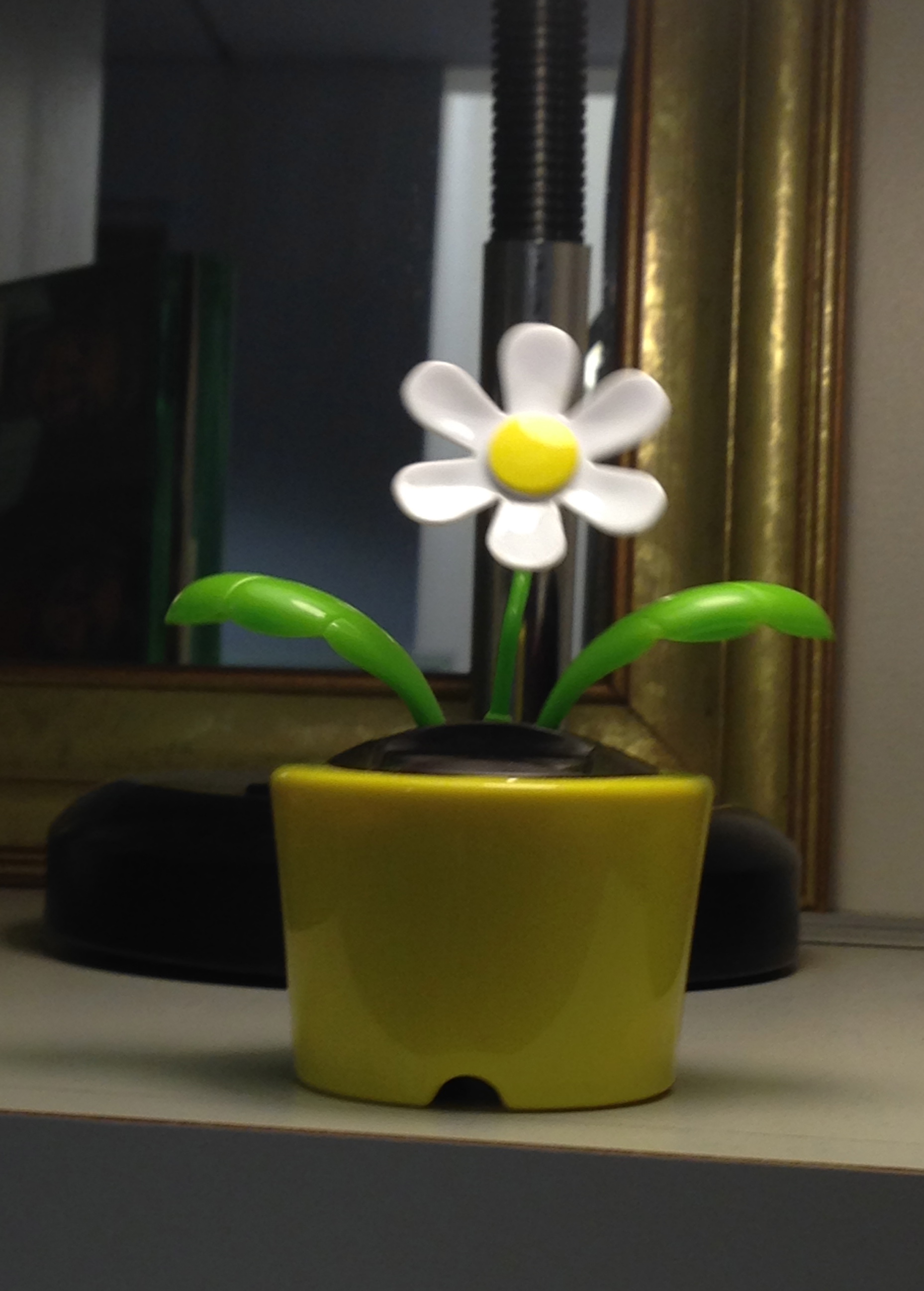
When I was walking around the hospital where I work, yesterday, I saw this at somebody’s work station and quickly snapped this photo.  That flower looks blurry, not just because of my hurriedness in taking the photo, but also because that friggin’ flower was DANCING.  There was no sound or music of any kind, but that flower just wouldn’t stop.

Friendly reminder: When people are doing challenging work, with no windows in sight, it helps to remember flowers. And dancing, too.

.

Image

Here are the plants outside my office, photo also taken yesterday.  If you look at the far right of that photo, you may be able to see the bird that appeared in a previous blog post, here.

Friendly reminder: the holidays are approaching.

–

Last photo, taken before I started this post this morning:
Image

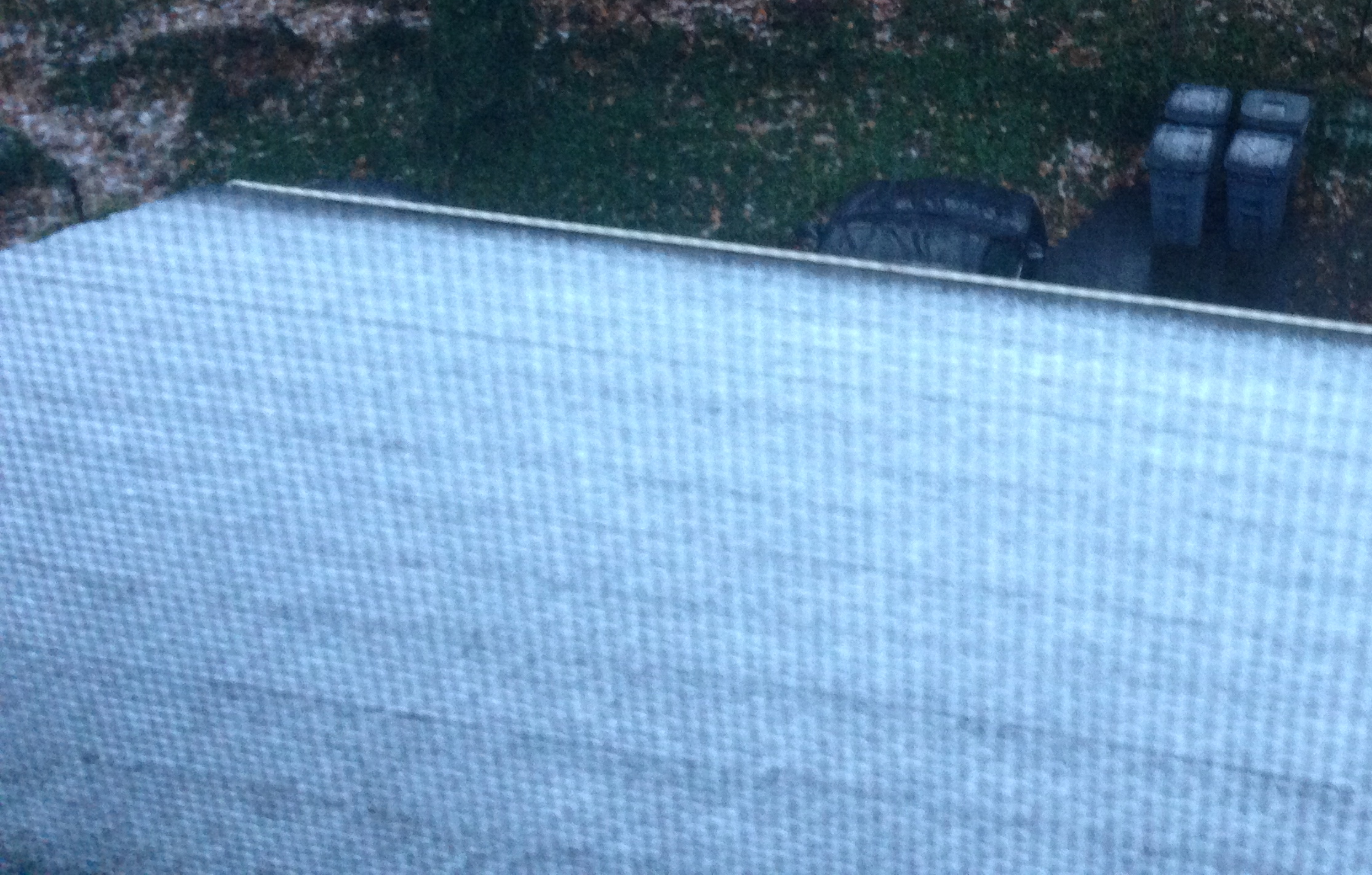
Friendly reminder: More snow is coming soon, to many neighborhoods near me.

.

Thanks for reminders — friendly and otherwise — and for all of you reading today.

_________________________________________

* For those of you who are keeping score on Cognitive Distortions, there’s another one: Comparisons.

Categories: personal growth, photojournalism | Tags: , , , , , , , , , , | 20 Comments

Day 237: What other people say

I have a really good memory, it seems, for what other people say.

Not for everything everybody says, of course.  It’s amazing the things I’ve forgotten over the years.   But I think I still have a pretty good memory for what people say.

Certain things people say really grab my attention, including these:

  1. Anything that indicates danger to somebody.
  2. Things said by people I respect.
  3. Comments about me, about what I’ve created, and about how I’m living in this world.

This is a partial list,  but those are on my mind, this morning.

Why?

Because I’m realizing, again, that some things people have said, over the years, have gotten “stuck” in my memory. They loom too large. And they’re not helpful.

I’m not blaming the people who said those things, right now.

In some cases, these people may not have even said what I heard.

It doesn’t matter, though, does it? Those things have stuck.

And I’d like to let go of those things, or at least reduce their power.

I have an idea!  How about if I write a few of these things down, and put them in a “magic” wastepaper basket?

Here’s one:

IMG_1693

That’s not helping me these days.  So let’s crumple that one up:

IMG_1696

.

Here’s another one, that hasn’t been helping:

IMG_1695

Let’s crumple that one, too,  to reduce its power.

IMG_1698

.

That felt good, I must say.

Next, let’s throw these two things away.  That means I need to choose a wastepaper basket.  Decisions, decisions.

I know!  This one:

IMG_1703

Perfect!  Now, let’s throw those things away:

IMG_1704

.

They’re in the magic wasterpaper basket!  Hooray!

Before I end this post for today, I would like to share something else I heard somebody say.  Opposed to the two things I just threw away, this is something

  1. I heard recently and
  2. I would like to stick in my memory more (not less).

I heard this yesterday, when I listened to this TED talk by lexicographer Erin McKean:

TED talk by Erin McKean

Here’s what she said that I especially want to remember now*:

“When parts of your job are not easy or fun, you kind of look for an excuse not to do them.”  (At 1:54 in the talk.)

That’s much better, rather than labeling myself …

A Procrastinator.

Lazy.

Or, this:

IMG_1692

Hey!  It’s another job for the magic wastepaper basket!

Thanks to Erin McKean,  all the people in my life who’ve taken the time to tell me something they thought would be helpful, cool wastepaper baskets everywhere, and to you, too, for reading today.

___________________________________

*Erin McKean refers to something else, in this talk, which I found incredibly valuable when somebody told me about it many years ago.  At 5:00, she describes what she calls “The Ham Butt Problem”, which also relates to letting go of old, unhelpful ways of thinking!

Categories: personal growth | Tags: , , , , , , , , , , , | 8 Comments

Day 203: Will

The topic for today is the word “will.”

I had many choices from the Google Buffet of Definitions, this morning. I chose the following, from the Merriam Webster site:

will   noun     \ˈwil\

1. : desire, wish: as

a : disposition, inclination <where there’s a will there’s a way>

b : appetite, passion

c : choice, determination

2

a : something desired; especially : a choice or determination of one having authority or power

b (1) archaic : request, command (2) [from the phrase our will is which introduces it] : the part of a summons expressing a royal command

3 : the act, process, or experience of willing : volition
4

a : mental powers manifested as wishing, choosing, desiring, or intending

b : a disposition to act according to principles or ends

c : the collective desire of a group <the will of the people>

5 : the power of control over one’s own actions or emotions <a man of iron will>

6: a legal declaration of a person’s wishes regarding the disposal of his or her property or estate after death; especially : a written instrument legally executed by which a person makes disposition of his or her estate to take effect after death

— at will
: as one wishes : as or when it pleases or suits oneself

A few random thoughts, about all that (accompanied by my friend, Google Images):

Image

In a previous (personal favorite) post here,  I wrote about To Do Lists.

Something that’s been on my To Do List, for a very long time?

Image

That kind of will.

Also, on my To Do List, for a shorter time, a different kind of will:

Image

A Living Will (which is not included in the Merriam Webster definitions) is defined as

A document in which the signer states his or her wishes regarding medical treatment, especially treatment that sustains or prolongs life by extraordinary means, for use if the signer becomes mentally incompetent or unable to communicate.

Hmmmm. I wonder why I’ve been avoiding completing both of those kinds of wills — The Last Will and Testament and The Living Will.

I repeat, hmmmmm.

Should I label myself “A Procrastinator?”  Would that help?

Nah.

Should I ask you, readers, if you might resist taking care of those kinds of wills?  Should I ask if you’ve encountered other people, in your life,  who have resisted taking care of those sorts of things, and the effect that has had on you?

Sure! I love asking questions like that.  Feel free to answer.

But ultimately, what would give me the will to just get those things done?

I can tell you three things that will help me take an achievable step, on Day 202, of This Year of Living Non-Judgmentally:

  1. Having just attended a 43rd year high school reunion.
  2. Identifying that achievable next step (calling a lawyer, whom I’ve identified, also).
  3. Remembering a “cliche” that my mother used to say a lot:

Where there’s a will there’s a way

(quoted in definition #1a, above).

That concludes today’s blog post, everybody.  Thanks for having the will to read, wherever you are.

Categories: personal growth | Tags: , , , , , , , , , , , | 15 Comments

Day 201: Naming vs. Labeling

This year, I’m working on reducing and letting go of anxiety.

That’s one of the kashmillion things, it seems, that I’m working on, during Our Year of Living Non-Judgmentally. Another thing I’m working on this year is focusing on what I AM doing, rather than on what I am NOT doing. That effective coping strategy is just another way of being more present in the moment.

Speaking about focusing, in the moment….)

I’m working on reducing and letting go of anxiety, this year, for these reasons:

  1. I am a psychotherapist, who does group and individual work at a large teaching hospital.
  2. As one of the Primary Care doctors in my practice described it, anxiety is “an epidemic among the people we see.”
  3. As I’ve mentioned here, anxiety is sometimes a sign that something is very important, and the work I’m doing is very important to me.
  4. Hospitals can be a PTSD trigger for me, because I spent a lot of time, as a child, in the hospital, undergoing heart surgeries and other scary things, often alone.

Regular readers of this blog may know that I like to acknowledge when somebody does something new.

The New is always risky, and deserves recognition, don’t you agree?

Here’s something new I just did, in this blog.

I used the term PTSD.

Time for my old friend, Google:

Post-traumatic stress disorder (PTSD) is a type of anxiety disorder. It can occur after you have gone through an extreme emotional trauma that involved the threat of injury or death.

Another gift, from Google Images:

Image

(That image, above, which I chose just because I liked it best? Turns out it’s from a blog called “PTSD after Open Heart Surgery. Go figure.)

Here’s a third gift from Google, regarding PTSD:

A helpful description of PTSD from NIMH (the National Institute of Mental Health):

Yes, I do love Google. Let me count the ways:

  1. When I am writing this blog, I can use Google to search for definitions and images to help support, clarify, and enrich my topic.
  2. Google gives me a large and varied choice, in response.
  3. I have the control to choose what I want.

I like having lots of choices and options.

I also like having the control to name things, in a way that helps me. As I’ve written about in this blog, naming something is the first step to recognizing and accepting it. (And acceptance — which doesn’t mean liking or approving– is the first step towards change.)

Naming is very different from labeling.

Labeling is one of the 12 Cognitive Distortions in CBT:

Labeling or Name-calling. We generate negative global judgments based on little evidence. Instead of accepting errors as inevitable, we attach an unhealthy label to ourselves or others. For example, you make a mistake and call yourself a “loser,” a “failure”, or an “idiot.” Labels are not only self-defeating, they are irrational, simplistic, and untrue. Human beings are complex and fallible, and in truth cannot be reduced to a label. Consider this: we all breathe, but would it make sense to refer to ourselves as “Breathers”?

While naming is helpful, expansive, and generous, labeling is not.

Labeling is restrictive. Labeling is judgmental. Labeling can cause paralysis and pain.

Very different from naming.

Diagnoses, at times, can be a kind of labeling. I work with people who have diagnoses of PTSD, and I see the effects of stigma attached to that diagnosis (and other diagnoses, too).

But diagnoses can also be a kind of helpful naming, too.

People, when they receive a diagnosis, often express relief. I hear people say that a diagnosis helps to contain and clarify their experience.

And, it helps to identify options. And identify next steps.

Like with my old friend, Google.

Okay! Time to put this blog post to bed, so I can start getting ready for my high school reunion tonight (where I’m looking forward to seeing other old friends).

Thanks to Google, my friends, my high school reunion, my readers, and everybody and everything else that is helping me, so much, on this year’s journey.

Categories: personal growth | Tags: , , , , , , , , , | 10 Comments

Day 151: Fringe

This is the definition that just came up for “fringe”:

Fringe (frinj)

Noun
An ornamental border of threads left loose or formed into tassels or twists, used to edge clothing or material.

Adjective
Not part of the mainstream; unconventional, peripheral, or extreme: “fringe theater”.

I am planning a trip overseas this summer, with my son.  It’s his first trip out of the country, and we’re planning on visiting England and Scotland.

I’ve started discussing the details of the trip with my wonderful niece, Laura (who is also a terrific travel agent).  She’s been asking me great questions about what kind of trip we would like to take.

Based on past experience, I would love a trip that had some structure, but also allowed room for improvisation.

And I was thinking about trips I’ve taken in the past with my friend Jeanette.

Jeanette and I took several trips together, in the 80s and 90s, and our blueprint for these adventures was establish a beginnning and ending point, and to make up the rest as we went along.

One of our trips, many years ago, started in Edinburgh, which was so beautiful.

edinburgh-thumb-450x281

We also had a great time attending the Edinburgh Fringe Festival.

edinburgh-fringe-festival

(I love Google Images, I have to say.)

This morning, when I was writing  my niece Laura about the priorities for the upcoming trip with my son  (including theater, museums, music, architecture, history and literature, food, fun, interacting with people who live there, walking around, etc.), I included the Fringe Festival as an example of something I would love to do.

Later,  I googled the Edinburgh Fringe Festival.  And this is what I found out:

  1. The official name is the Edinburgh Festival Fringe (check out that non-mainstream word order).
  2. The festival, this year,  is happening when we’re traveling.
  3. Yippeee!!

So that is really the major point of today’s blog post.

Sure, there’s more that I could write about the word “fringe,” including:

  • I’ve always liked the unconventional, over the mainstream.
  • When I’ve felt bad about myself, I’ve used the word “weird” as a self-critical label.
  • For a long, long time, I’ve loved “Beyond the Fringe” (and Peter Cook and Dudley Moore).

But I don’t want this post to get too peripheral.

Thanks for reading today, everybody!

Categories: personal growth | Tags: , , , , , , , , , , | 5 Comments

Day 147: Labeling

The Cognitive Distortion Du Jour, dear readers, for this blog post is …..

Labeling.

Here’s the definition of Labeling (from the list of distortions I’ve posted, here).

13. Labeling or Name-calling.

We generate negative global judgments based on little evidence. Instead of accepting errors as inevitable, we attach an unhealthy label to ourselves or others. For example, you make a mistake and call yourself a “loser,” a “failure”, or an “idiot.” Labels are not only self-defeating, they are irrational, simplistic, and untrue. Human beings are complex and fallible, and in truth cannot be reduced to a label. Consider this: we all breathe, but would it make sense to refer to ourselves as “Breathers”?

This is a misery-causing distortion that I see all the time– in the people I treat (as a therapist), in the people I love, and (of course) in myself.

Here’s a way to challenge labeling (from this list of “antidotes”):

Examine the Evidence. Instead of assuming your negative thought is true, look at the evidence. For example, if you think “I never do anything right,” list some things you do well.

Let’s see if I can use this, to challenge a label I’ve applied to myself.

Here are labels I use — names I call myself — when I make a mistake.

Stupid. Idiot.

Let me examine the evidence.

I do have some evidence to challenge that, for sure. Actually, when I said to my bf a couple of weeks ago, “You know … maybe I am a smart person,” he replied, “Ann, if you, of all people, aren’t sure about that, I don’t know what else to say to you.”

He was referring to some pretty convincing data: That is, I did well in school. And I went to a really prestigious college.

And I’ve been trying to gather more evidence to challenge those judgmental, critical labels. For example, people sometimes use the word “smart” and “wise” when they describe me. A couple of weeks ago, I found out that a person I think is really smart calls me “brilliant” when talking about me. (This amazed me, but I took it in.)

I’m examining the evidence and it looks good.

You know what, though? All that evidence, no matter how good, doesn’t matter when I’m feeling depressed or, sometimes, just when I make a mistake. Then, the evidence … Poof! …  disappears.

I’m “brilliant” enough, during those times, to make the case that I’m stupid, an idiot, or simply not smart enough, with “reasoning” like this:

I used to be smart when I was a younger, but I’m not smart any more.

I’m a “book” kind of smart. That doesn’t help me survive in this world.

I got into that prestigious college mostly because the admissions people knew about my heart condition and hospitalizations, and because my cardiologist’s family had some “pull.”

If I was smart, I would feel smart!

How can I call myself smart when I see people all around me who are smarter?

People seem to talk to me like I’m stupid, a lot of the time.

Look at all the friggin’ mistakes I make, every day!

Arrrghhh!

Well, I’m working on letting go of those kinds of thoughts, people.

Here are more “antidotes” that help with that, from my handy-dandy list:

List the positives. To deal with the tendency to focus on the negative, make lists of good things that are happening, good things about yourself, and things that you are accomplishing (even little things). Focus on what you ARE doing, rather than on what you’re NOT doing.

Challenge Labels. If you label yourself negatively, such as “a fool” or “a loser,” remind yourself that such absolute terms are subjective and meaningless, and that human beings are too complex to be reduced that simplistically. Also, consider the possibility that somebody else may have given you that idea about yourself, and that they were wrong.

Reality testing. Ask people questions to find out if your thoughts and concerns are realistic or true. This is a particularly effective response to the distortion of mind-reading.

Okay, people, thanks for staying with me, so far. At this point, I’m going to take a break for a walk (it’s a beautiful day — Memorial Day, here in the Northeast U.S.).

Intermission (for a walk on a beautiful day).

I’m baaaaack! And I want to finish this post up pretty quickly, so I can visit for a little while with my downstairs neighbor, Karen. (I’m very lucky she lives here.)

I thought about this post, on my walk. And I noticed that I was …. challenging labels.

For example, in the past, if I had to label what kind of photographer I am, I would probably have said, “an okay one.” I probably wouldn’t have used the word “good.” Why not? Usually, I’m very aware of all the reasons why I’m not good photographer (e.g., I often get my thumb in the picture, I’ve never been trained, I was “terrible” at art classes in school, and, in general, my natural talents seem to land more in the area of sound than sight).

However, last week, my friend Krystal posted this comment on Facebook, in response to one of my Provincetown photos.

“Ann! You are a great photographer!”

What? “GREAT ….. photographer?”

Even though that label was new and unexpected, I let that new evidence in. That is, somebody I respect thinks I’m a great photographer! Yippeee!

And that helped me feel even happier today as I took these photos, during my walk.

Challenging Labels, on a Memorial Day Walk

A short photo essay, by Ann

IMG_1025

That’s a baby rabbit, people … in the morning! I almost walked by it. It was very small and very still.

I was especially delighted and surprised, since we usually see rabbits at dusk. That’s because rabbits (and cats) are crepuscular — a “label” I first heard recently, thanks to my bf, which means “active at dusk and dawn.”

And I guess I must be smart, because I remembered the frggin’ word today, and how to spell it.

.

IMG_1029

I saw this tree when the song “Lush Life” was playing on my iPhone. I couldn’t capture how beautiful it was, but I tried, a couple of times.

IMG_1032

.

By the way, Krystal posted something else on Facebook, after she read my Provincetown blog post:

“Ann! You’re a great photojournalist!”

That was echoing in my head today, too, which helped me take these photos.

IMG_1033

I liked the balance of beauty, there. And here ….

IMG_1034

.

Okay. One last thing I noticed, on my walk, which helped me challenge another, old thought:

IMG_1036

“Purple and red do NOT look good together.”

That’s obviously not true.

And look what I’m wearing, right now:

photo (54)

Purple and red look good together, even on me! (See here for more about that t-shirt.)

Thanks to my neighbor, Karen, for taking that last picture. I needed a little help from my friends, today, to do this blog post. Special thanks to Krystal.

Thanks to you, too, of course, for reading today.

Categories: personal growth, photojournalism | Tags: , , , , , , , , , , | 13 Comments

Day 92: What’s so scary?

This is what I want to write about, right now, because I felt scared today, and I’m still feeling it.

I thought it might be helpful to ask myself the question: “What’s so scary?” and see what happens.


Okay, let the questioning begin.

What’s so scary?

I’m glad you asked.   Here’s what so scary: I have to make several presentations, about the therapy groups that I’m doing, to several different audiences, starting next week.  I admit that I lost track of the time and — with kind of a shock —  realized today that it was just a week away.  A week!

What’s so scary about that?

I’m not really prepared.  I mean, I THOUGHT I was prepared. But now that it’s real, and I’m imagining doing the presentation, in front of people I don’t know, who I’m imagining as bored, judgmental, or even contemptuous —  I’m realizing that what I THOUGHT would be good enough, probably isn’t.

So, obviously, I should have been working on this presentation more before. Also, this is the beginning of an inexorable chain of presentations  — SEVEN in the next six weeks. PLUS, this is leading up to another, much bigger presentation I have to do in June to an audience that REALLY scares me.

What’s so scary about that?

Haven’t you been listening?  There is the chance for FAILURE here!  Plus, I could disappoint some people who are expecting me to be good.  So I’m feeling guilty about not doing more, before today. Plus, I’m feeling like a CONCEITED JERK for thinking that I had things all together, and didn’t need to prepare much for this.  What was I thinking, when I said I would do this? I should have known this would scare the sh*t out of me!  How am I ever going to be calm for the next two months??  This is the most stressful thing EVER.  And work can be stressful enough, already.  WHAT WAS I THINKING?  I should have known better.  That’s what I get, for thinking that I was in a confident and experienced enough place to be able to do this without FREAKING OUT.  I mean, look at me now!

So what’s so scary?

Huh?

Oh.

I guess my thoughts are scaring me, not the actual presentation.

There are an awful lot of cognitive distortions in those thoughts, which I can see, now that I’ve written them down. I  see shoulds, mind reading, catastrophizing, labeling, emotional reasoning, and there’s probably more.

Okay.

Here’s what I’m thinking now.

I guess I don’t know how the presentation is going to turn out.

I guess I’m afraid of my own fear, in a way.

I guess imagining the audience being bored, judgmental, and/or contemptuous isn’t helping me right now.

Okay.

I’m actually a lot less scared.  Amazing.

But what if those thoughts come back between now and next week?  Or between now and June?

I’ll just ask myself,  What’s so scary?

Until it isn’t.

And if that doesn’t work, I’ll figure something else out.

Thanks for reading.

Categories: personal growth | Tags: , , , , , , , , , , , | 7 Comments

Day 50: Sleep — Needs, History, Distortions, and a Wish

I’ve been struggling to get enough sleep lately.  I seem to be a person who can function pretty well without enough sleep.

(Sometimes I think the world is divided into two types of people: (1)  People who can function “well enough” without taking care of their sleeping needs and (2)  People who can function well enough without taking care of their eating needs.)

(Sometimes I think the world is divided into two types of people: (1) People who think that the world is divided into two types of people and (2) People who don’t.)

So even though I am used to functioning without enough sleep (by the way, I CANNOT function without enough food), I still feel pretty lousy when I get less than 6 hours of sleep a night. And getting 6 hours or more has been a problem for me lately.

I know a lot of people who struggle with sleep issues.  It seems to me that this might be an epidemic —  although I’m not an expert about sleep, by any means.

Speaking of being an “expert”,  I plan on writing a future post about Experts — and the punchline for that post will probably be something like this: We Are All Experts, But Only of Our Own Experience.

So while I’m not a Sleep Expert, I am trying to access, right now, my expertise about Sleep and Me.

And expertise starts with looking at data and history.

So that means  that, in order to improve my sleep, I might start by looking at my history of sleep issues.

But I’m resisting doing that right now.

That resistance probably has to do with my preference — or tendency —  to focus on the present moment rather than focusing on the past.

That preference — for the present over the past —  might have to do with several things, including my perception that I don’t have a good memory.

Pardon me while I indulge in a rather long digression about that thought: I Don’t Have A Good Memory.  However, you might find this digression useful — since it will reference several Cognitive Distortions, all listed and defined here.

Digression about the thought that  I Don’t Have a Good Memory.

This thought is probably  an unhelpful piece of self-judgment, which seems to involve several cognitive distortions, including Labelling. Because what does “not having a great memory” mean?  Does that mean I think that my memory is not as good as most other people’s? If so,  that thought involves the cognitive distortions of Comparisons AND Mind Reading.   Also, now that I think about it, I do have some data — from cognitive tests I’ve taken — that indicate that I have a Very Good Memory, although I seem to have trouble holding on to that data. (More proof that I have a bad memory?) (Kidding!) . Also, maybe I’m comparing my memory now to how my memory used to be when I was younger, another form of the distortion of Comparisons.

Shorter digression about the thought (expressed 4 paragraphs before)  that I Tend to Focus on The Present Moment Rather Than On The Past.

It’s not all or nothing. (Wouldn’t you know it? This is related to yet another Cognitive Distortion.) That is, I don’t have to look at the past OR the present. I can  look at both the past AND the present when I’m working  on growth and healing (in myself and others). 

Hmmm. I got pretty caught up in those digressions, where I noticed and challenged some cognitive distortions. Is it possible I can find my way back to The Topic of  Sleep, and finish this post before I leave for work?

I think I can. Here are some things I know, this morning:

Most nights, I am not getting enough sleep.

I have had some resistance to looking at this issue.

I deserve to get enough sleep.

I would like to get enough sleep.

I can access my own experience and expertise about this issue.

I can also seek help — from people who have expertise about sleep — to work on this issue.

Wow.  As often happens when I write a post, the post goes places I don’t expect.

However, where the post is ending up, this morning,  relates to a wish I made as I was writing it.

I wish that I could get more sleep.

I think I’ve taken some steps — and identified others — in this post, which may help me move towards that wish.

Thanks for reading.

Categories: personal growth | Tags: , , , , , , , , , , | 6 Comments

Powered by WordPress.com.